
This article is written for Lumina Pilates B2B buyers, with product links and inquiry paths adapted to Lumina's catalog.
Quick answer for commercial buyers
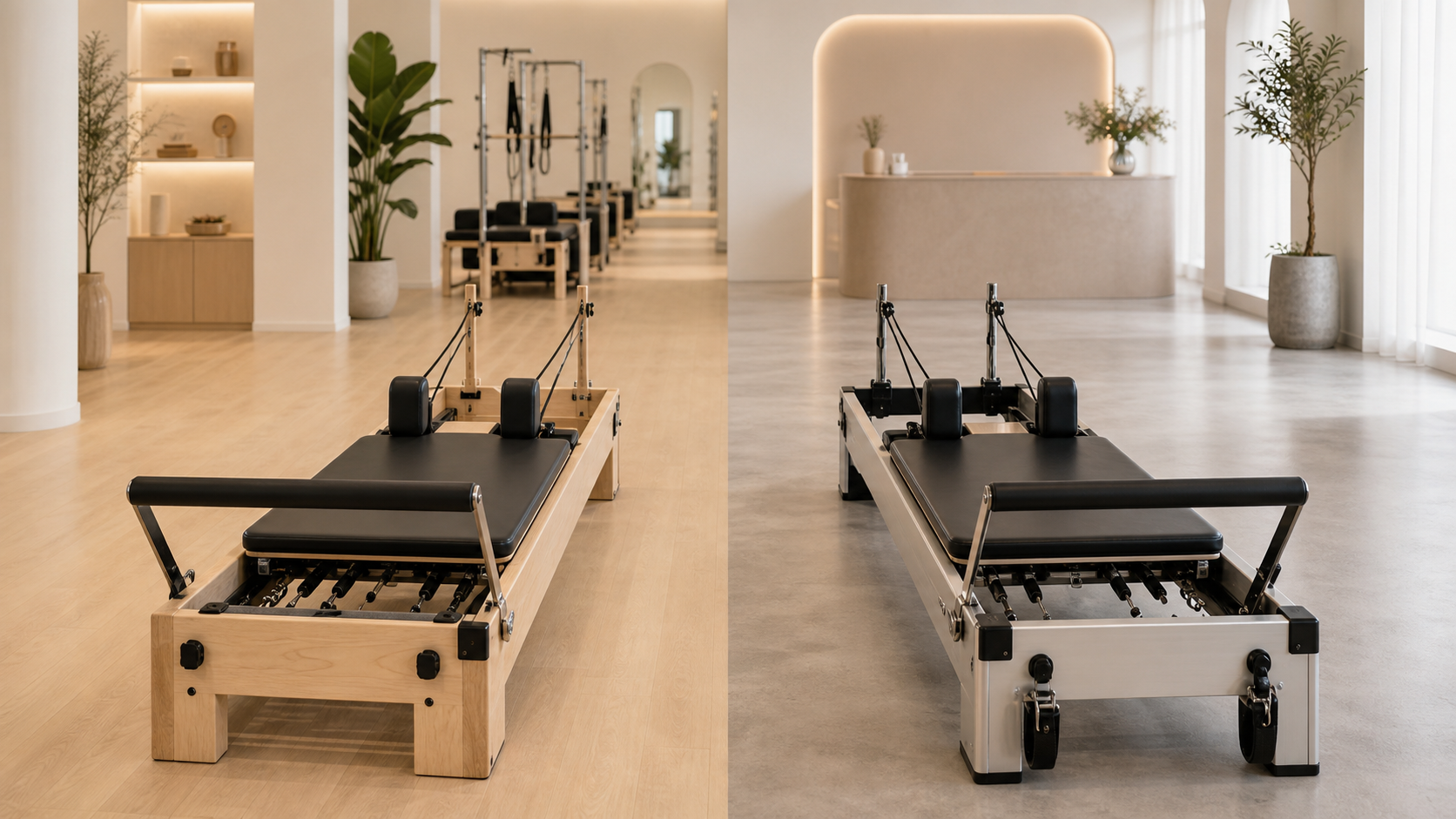
Wood reformers are usually better for studios that want a premium, warm and permanent studio look. Aluminum reformers are often better for modern rooms, foldable models, easier handling and compact storage scenarios. Neither option is automatically better for every buyer. The right answer depends on the studio program, room design, expected daily use, buyer channel and customization needs.
For distributors and importers, the best product line may include both. A wood reformer can serve premium boutique studios, while an aluminum or folding model can serve compact rooms, home studio buyers and practical commercial spaces. Clear positioning helps local sales teams explain the difference to their customers.
Studio appearance and buyer positioning
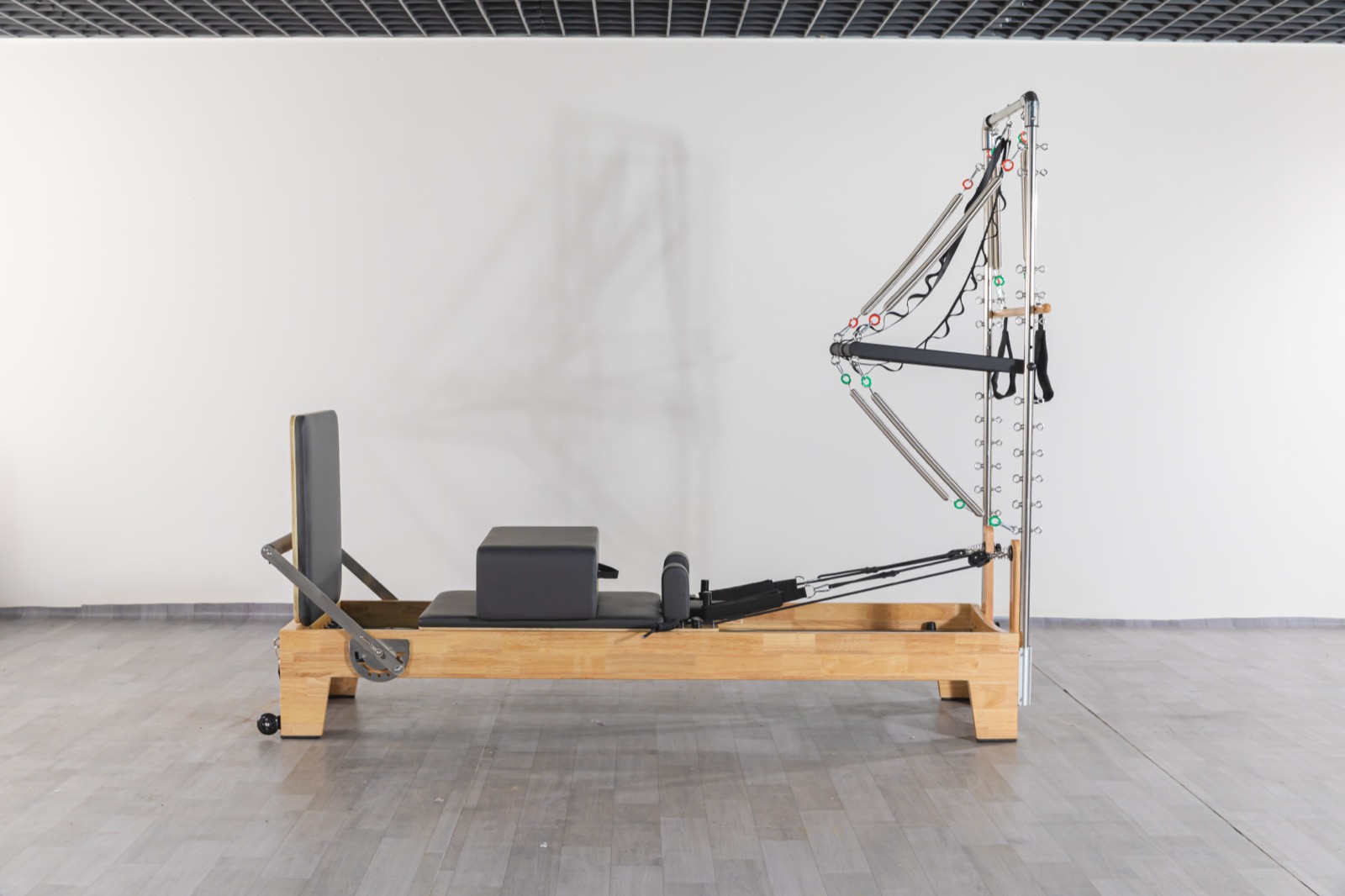
Wood reformers create a natural, premium impression. Maple and oak finishes can match boutique interiors, wellness rooms and hotel Pilates spaces. Buyers who sell to premium studios often use wood reformers as the hero product because they photograph well and feel aligned with a high-end training environment.
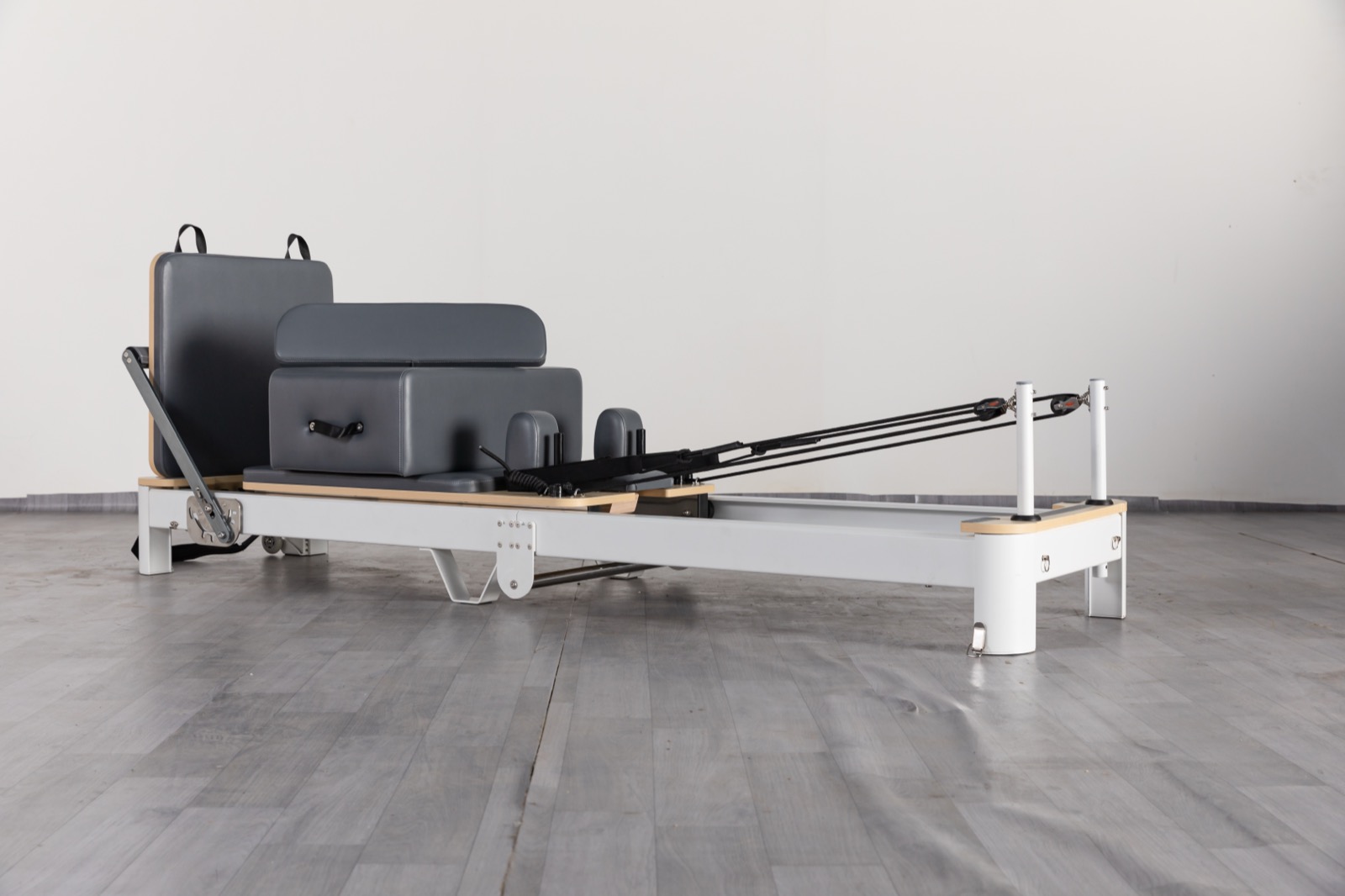
Aluminum reformers communicate a cleaner, modern and practical feeling. They may fit studios that prefer a lighter visual profile or need folding functionality. For online sellers, aluminum folding reformers can also be easier to explain as compact or storage-friendly products, as long as stability and movement quality are clearly presented.
Durability and daily commercial use
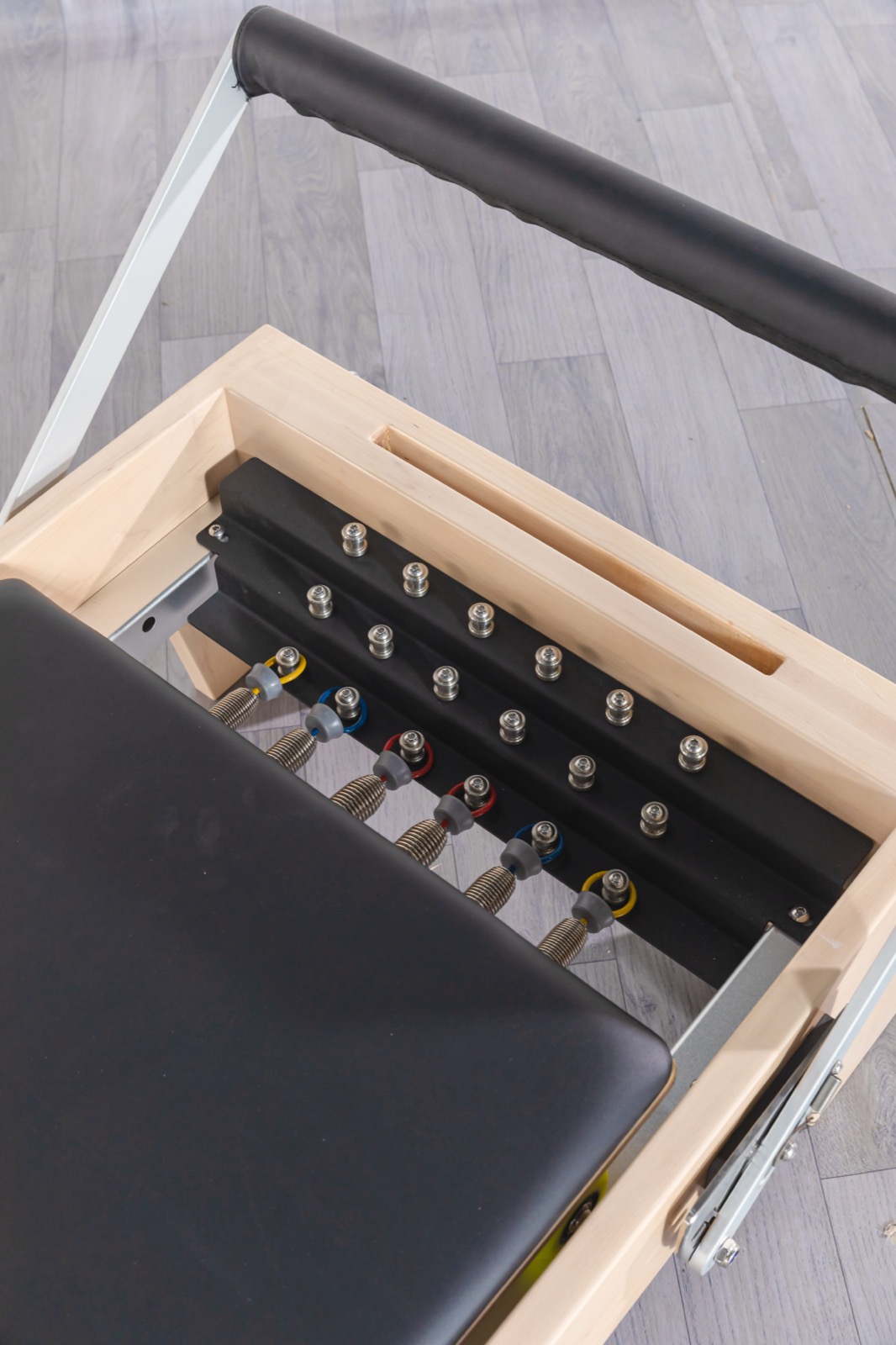
Durability is not only about material name. Buyers should evaluate frame construction, rail alignment, carriage movement, spring system, pulleys, ropes, upholstery and hardware. A well-built wood reformer and a well-built aluminum reformer can both serve commercial studios when the design and QC process match the use case.
Ask the supplier how the equipment is checked before packing. For commercial use, smooth movement, stable frame feel and reliable adjustment matter more than broad claims. The supplier should be able to discuss the product's intended buyer type, replacement parts and packing protection.
Storage and room flexibility
If a studio has a permanent reformer room, wood reformers may be easier to choose because the buyer is not moving the equipment often. If the room is compact, mixed-use or shared with other wellness services, aluminum or foldable models may become more attractive.
For folding reformers, measure the room twice: first in training mode and then in storage mode. Confirm folded size, unfolded size, wall clearance, door width, ceiling height, storage path and wheel or moving system. A folding reformer that does not fit daily workflow will create friction even if it looks practical in a catalog.
Shipping and packing considerations
Overseas buyers should confirm packing size, gross weight, accessory organization and export protection. Wood reformers may require careful surface protection. Folding aluminum models may require attention to moving parts, locks, wheels and alignment during packing.
For distributors, packing consistency matters because it affects warehouse handling, local delivery and after-sales support. Ask for packing details before placing a bulk order, especially if the shipment includes mixed products such as reformers, chairs, barrels, Cadillac units and accessories.
OEM and private label options
Both wood and aluminum reformers can support custom logo and private label discussions, but the best method depends on the model. Buyers may discuss logo placement, upholstery color, frame finish, carton labels, product naming and packaging direction before production.
A private label buyer should avoid changing too many mechanical details without a sample or pre-production check. The goal is to create a consistent product line that can be reordered, not a one-time design that is difficult to support with spare parts.
Which option should different buyers choose?
Boutique studios usually start by comparing maple or oak wood reformers because appearance and member experience matter. Compact studios, home studio sellers and mixed-use wellness rooms often compare aluminum or foldable reformers. Distributors may want both categories so their sales team can serve different price and positioning levels.
Physiotherapy clinics should focus less on material preference and more on stability, adjustability, controlled movement, cleaning, accessories and long-term support. Hotel wellness buyers may prefer wood reformers for presentation, then add a Cadillac or tower option for private training depth.
Procurement notes for overseas buyers
For overseas buyers, the wood versus aluminum decision should also include shipping, installation, after-sales and local market positioning. A studio owner may focus on the training room, but a distributor needs to think about how the product will be sold, stored, delivered and serviced after arrival. This is why a professional comparison should include both user experience and supply chain details.
Wood reformers may create stronger emotional value in a showroom. They can help a dealer present a premium Pilates corner and make it easier for studio owners to imagine a finished room. However, the buyer should confirm surface finish, carton protection and cleaning guidance. If the reformers are shipped in bulk, surface protection and carton handling become part of the product experience.
Aluminum reformers may be easier to position for compact rooms, online retail channels and buyers who ask about foldable design. The supplier should still provide clear information about frame stability, locking structure, moving wheels, folded size and accessory compatibility. If the buyer plans to market the model as commercial equipment, the sales copy should be supported by actual design and use-case suitability.
In a distributor catalog, the best strategy is often not to choose only one material. A balanced product line might include one premium wood reformer, one aluminum folding reformer, one tower reformer and one full studio package. This gives the distributor a simple way to serve boutique studios, home studio buyers, rehab rooms and commercial studio owners without overwhelming them with too many similar SKUs.
When requesting OEM options, separate visual customization from structural customization. Visual customization may include logo, upholstery color, frame finish and packaging. Structural customization may affect stability, replacement parts and production timeline. Overseas buyers should confirm which requests are standard, which require sampling and which are not recommended for long-term supply.
Material choice also affects content marketing. Wood reformers are easier to connect with topics such as boutique studio design, premium Pilates rooms and hotel wellness spaces. Aluminum reformers are easier to connect with compact studio planning, foldable reformers and practical commercial setup. This matters for distributors and private label brands that plan to generate leads through Google SEO or social content.
Before confirming a bulk order, ask the manufacturer to help organize a comparison sheet. The sheet should include product name, frame material, size, packing size, weight, spring system, accessory list, logo method, packaging notes and recommended buyer scenario. This makes it easier to compare the options internally and share them with partners or investors.
The final decision should feel clear to the sales team. If the team cannot explain why a studio should choose wood, aluminum or foldable, the product line may need simplification. A supplier with export experience should help translate product details into practical buyer language, not only provide technical terms.
How to compare quotations without choosing the wrong material
When buyers compare wood and aluminum reformer quotations, they should avoid looking at material and price in isolation. A quotation may include different accessories, different packing assumptions or different customization scopes. Before deciding that one option is cheaper, check whether the same accessories, upholstery details, spring sets, ropes, boxes, jump boards and export packing support are included.
The next comparison point is the intended room. If the project is a boutique studio with a premium interior, a wood reformer may support stronger perceived value even when the landed cost is higher. If the project is a compact studio or online retail channel, an aluminum folding reformer may be easier to communicate to end buyers. The best material is the one that matches the sales story and daily use case.
Ask the supplier to explain maintenance and replacement parts in practical language. Which parts are most likely to need future replacement? Can the buyer order ropes, springs, wheels, pulleys or upholstery-related parts later? Are the same parts used across multiple models? This matters for distributors because local service becomes easier when the product line is not overly fragmented.
For private label buyers, compare how each material supports branding. A wood reformer may allow a premium studio identity, while an aluminum model may support a clean modern brand. Packaging, product naming and photography direction should match that positioning. A mismatch between material and brand story can make the product harder to sell even if the specification is acceptable.
Shipping and warehouse handling also deserve attention. Confirm whether the supplier can provide packing size, gross weight and carton information before shipment planning. If the order includes multiple product families, ask how the cartons will be identified. This is not glamorous SEO content, but it is exactly the kind of information overseas importers and distributors need before placing a real order.
Finally, compare the supplier's communication quality. A manufacturer that can explain tradeoffs, ask about buyer scenarios and provide safe specification wording is usually easier to work with than one that only repeats generic promotional claims. In bulk Pilates equipment sourcing, clarity reduces risk.
Questions to ask the manufacturer
Ask which reformer material is most suitable for your target buyer, not only which model is popular. A manufacturer should be able to explain why a wood reformer fits premium studios, why an aluminum or foldable reformer fits compact rooms, and where each model may not be the best choice.
Ask whether the same accessory set, spring configuration and packing assumptions are included in both quotes. If one quote includes a reformer box, jump board or extra accessory and another does not, the comparison is not fair. This is a common reason buyers misunderstand the real cost.
Ask what information can be provided for your local sales team. Product photos, safe specification wording, packing details and buyer-scenario notes can help distributors sell the product more professionally. A factory that supports content and documentation can be valuable for long-term cooperation.
Ask how the supplier handles repeat orders and small changes. A distributor may start with one batch and then adjust colors, logo placement or model mix after market feedback. The supplier should help keep records so the next batch stays consistent unless the buyer intentionally updates the product.
FAQ
Is wood or aluminum better for commercial Pilates studios? Both can work. Wood often fits premium interiors, while aluminum is useful for modern, foldable or flexible-space needs.
Are aluminum reformers less stable than wood reformers? Not necessarily. Stability depends on design, frame structure, locking system, carriage alignment and QC.
Which reformer is better for distributors? Many distributors benefit from carrying both wood and aluminum options because they serve different buyer segments.
Can both wood and aluminum reformers be customized? Yes, logo, upholstery, frame finish and packaging can be discussed, depending on model and order requirements.
Key Takeaways
- Wood reformers fit premium studio positioning.
- Aluminum and foldable reformers fit compact and practical buyer scenarios.
- Bulk buyers should confirm specs, packing and customization before choosing.