
This article is written for Lumina Pilates B2B buyers, with product links and inquiry paths adapted to Lumina's catalog.
A practical comparison for studio buyers
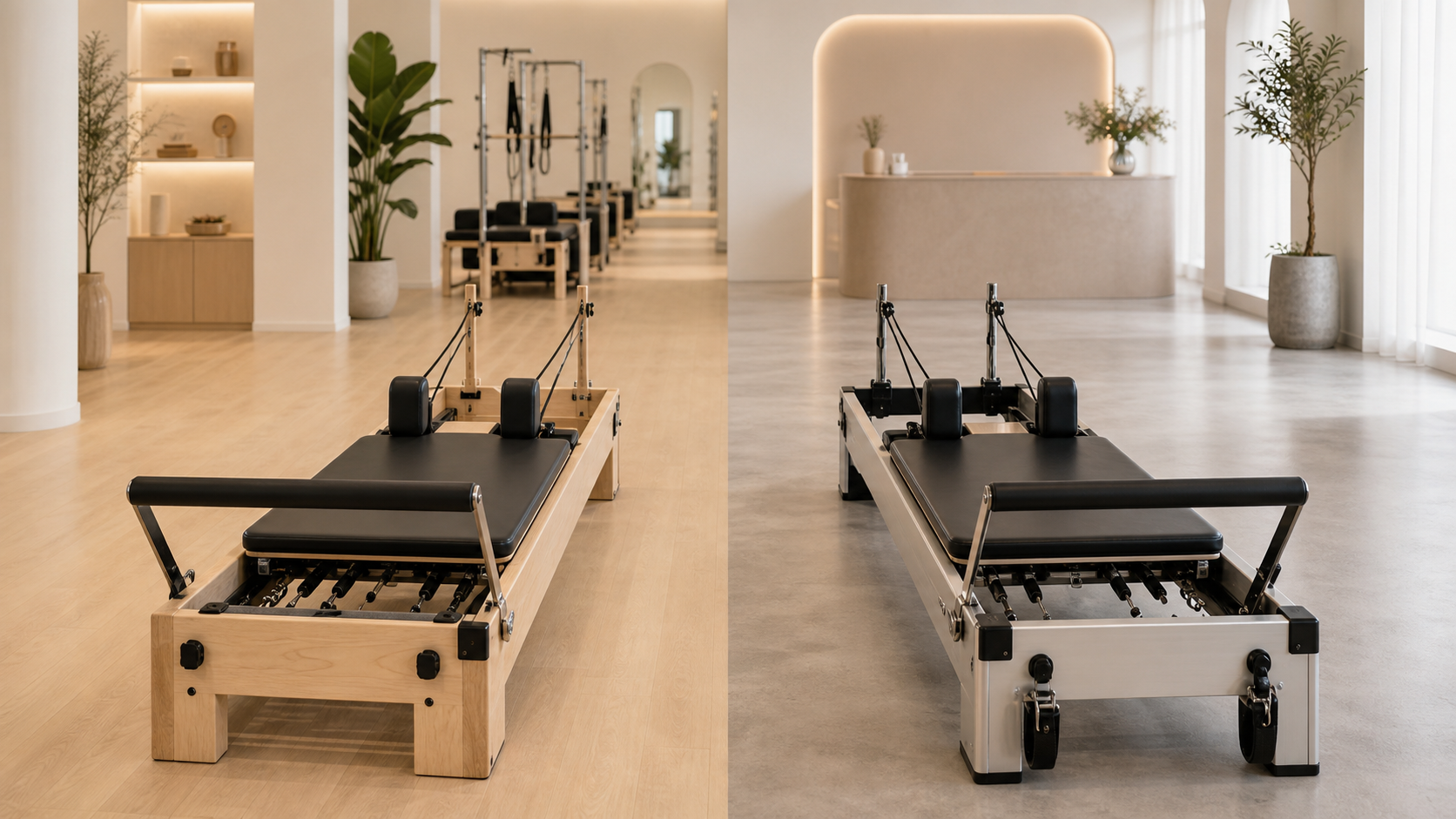
Wood and aluminum reformers can both be suitable for commercial Pilates studios, but they serve different buyer needs. A maple wood reformer often communicates warmth, premium positioning and boutique style. An aluminum reformer can feel modern, practical and easier to match with compact or folding structures.
The better choice depends on the studio concept, expected use, room size, cleaning routine, shipping plan and budget. This comparison is written for studio founders, importers and distributors who need a practical decision framework rather than a simple material preference.
When wood reformers make sense
Wood reformers are commonly selected for boutique studios, private training rooms and premium wellness spaces. Maple wood gives the equipment a natural, warm appearance. In a studio with light flooring, soft curtains and neutral colors, wood reformers become part of the interior design instead of looking like industrial fitness equipment.
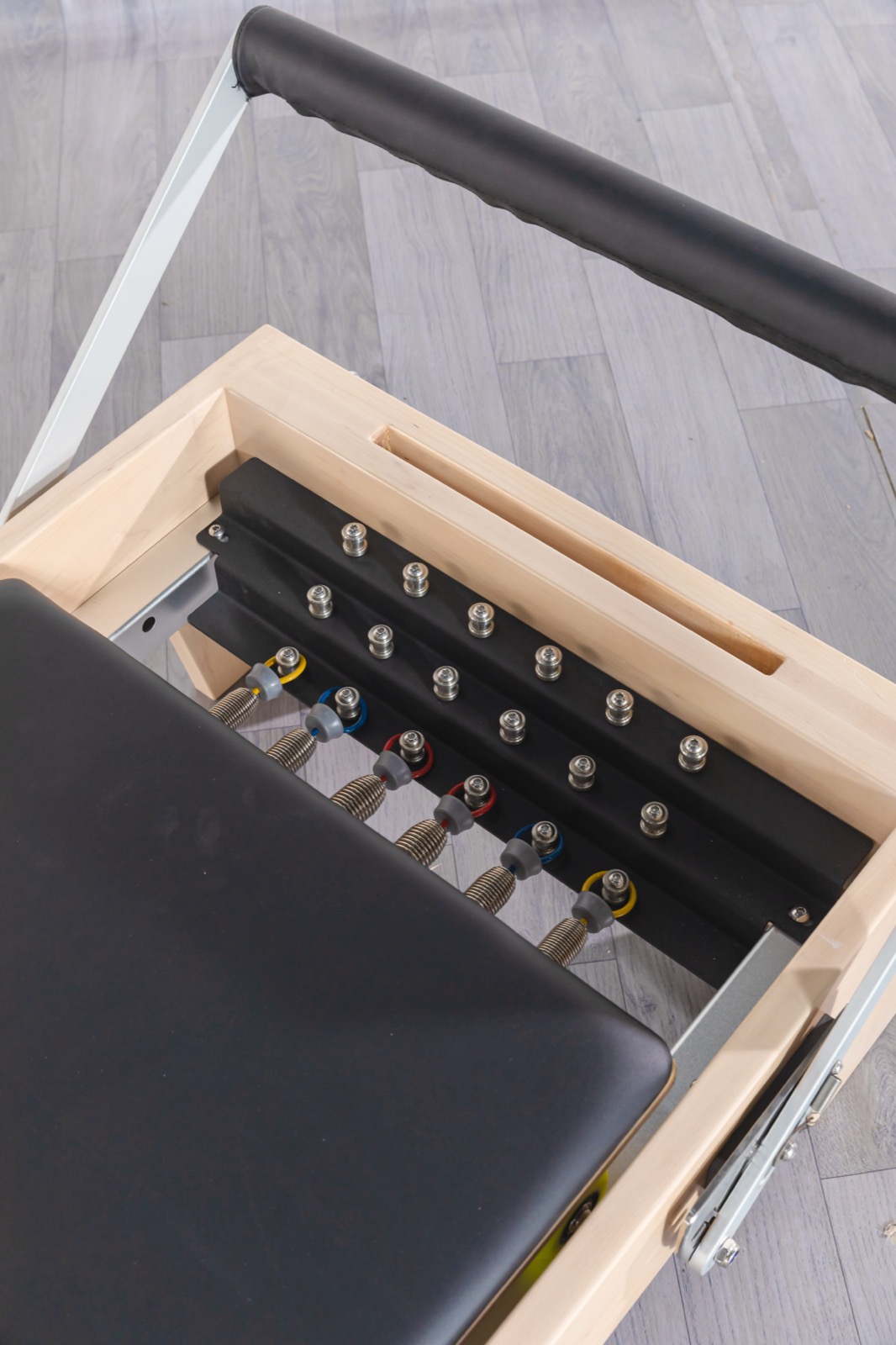
From a product perspective, buyers should check wood selection, frame finishing, surface smoothness, joint strength and moisture protection. A good wood reformer should feel stable, not decorative only. Lumina's factory checks focus on structure, carriage movement, finish consistency and accessory fit before packing.
When aluminum reformers make sense
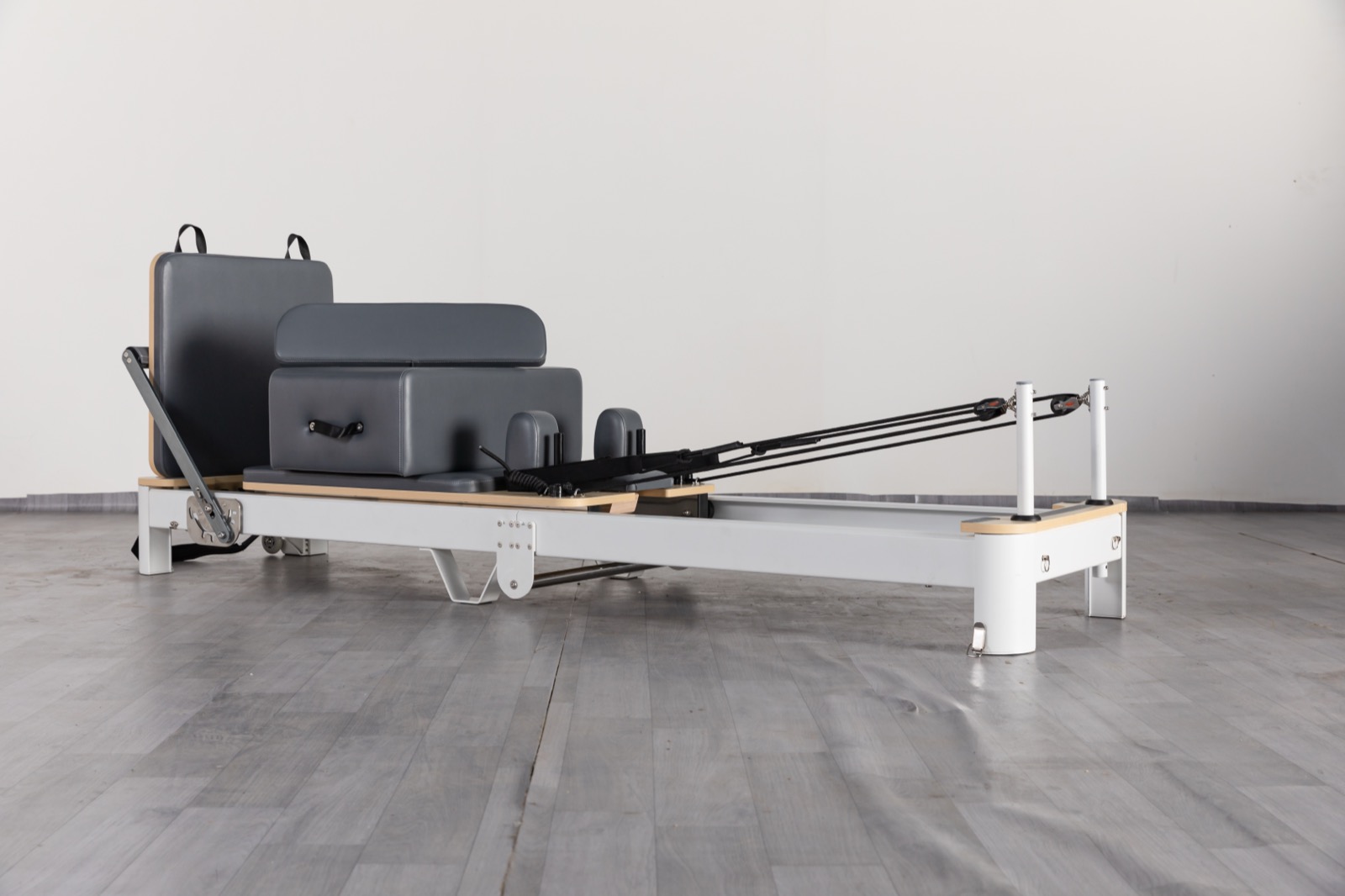
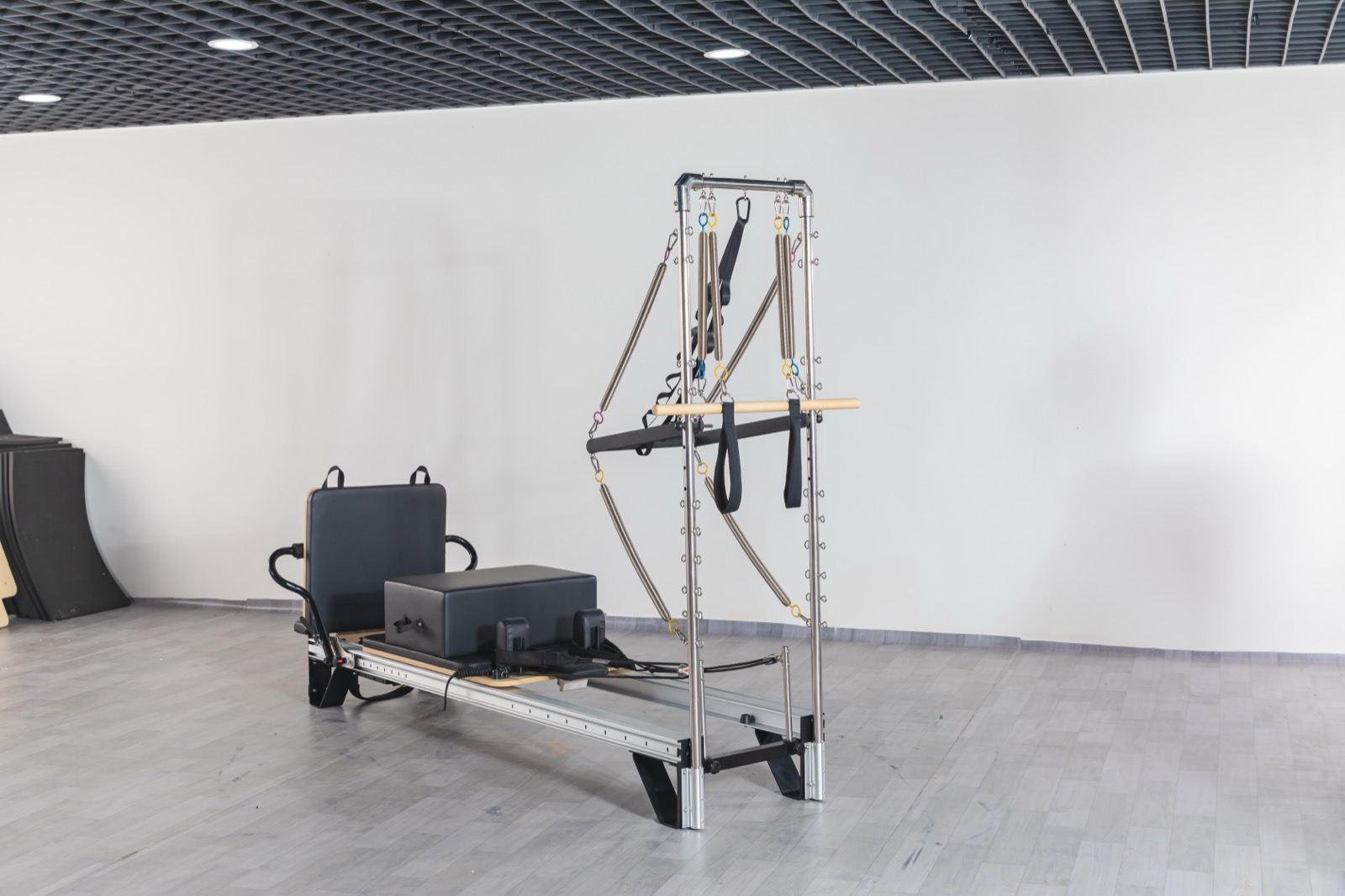
Aluminum reformers are often chosen for modern studios, gyms, distributors and buyers who need a clean commercial look. Aluminum frames can support folding designs, compact storage and efficient export packing. They may also appeal to buyers who want a more technical or contemporary visual style.
For aluminum models, buyers should check frame thickness, rail alignment, connection quality, coating finish and carriage noise. A lightweight-looking model should still feel stable during exercise. If the reformer will be used in daily group classes, carriage smoothness and spare-part availability are more important than appearance alone.
Stability, maintenance and cleaning
Both wood and aluminum reformers must deliver stable movement. A studio client should not feel shaking during footwork, bridging or long stretch variations. In factory testing, the important checks include frame alignment, carriage tracking, spring attachment, pulley response and stopper contact. These checks are material-independent.
Wood reformers need careful surface finishing and regular cleaning with appropriate methods. Aluminum reformers may be easier to wipe down in high-volume settings, but rails, wheels and moving parts still need routine inspection. For both types, studios should create a simple maintenance log covering upholstery, springs, ropes, pulleys, carriage wheels, stoppers and screws.
Shipping and distributor considerations
Export buyers should ask about packing because reformers are large products with visible surfaces. Wood frames require protection against scratches and pressure marks. Aluminum frames also need protection for rails and coated surfaces. Before shipment, ask for packing photos, product labels and a packing list.
Distributors often need both materials. Aluminum models can serve practical price tiers or folding reformer demand, while wood reformers support premium studio positioning. A mixed catalog can cover more search intent and give sales teams a better answer for different buyer budgets.
FAQ
Are wood reformers more premium than aluminum reformers? They often look more premium in boutique interiors, but quality depends on manufacturing, not material alone.
Are aluminum reformers better for folding models? Aluminum is commonly used for compact and folding designs, but buyers should still check stability and carriage smoothness.
Which material is better for distributors? Distributors often need both: aluminum models for practical price tiers and wood models for premium positioning.
Conclusion and next step
Wood and aluminum reformers are both valid choices for commercial Pilates buyers. Wood supports boutique positioning and warm interiors. Aluminum supports modern, compact and distributor-friendly product lines. The best decision comes from matching the material to the studio's application, brand positioning and maintenance expectations.
Not sure which reformer material fits your market? Contact Lumina with your target buyer type, quantity and destination. We can help compare wood, aluminum, folding and multifunction options.
Key Takeaways
- Wood reformers support premium boutique studio positioning.
- Aluminum reformers can fit modern, compact and distributor-friendly product lines.
- Stability, carriage smoothness and spare-part support matter more than material alone.