
This article is written for Lumina Pilates B2B buyers, with product links and inquiry paths adapted to Lumina's catalog.
Quick answer for studio buyers
For most commercial Pilates studios, the best reformer is not simply the model with the best photo. The right choice depends on room size, class format, instructor workflow, buyer budget, target customer positioning, service capacity and how much customization the studio or distributor needs. Wood reformers often fit premium boutique rooms. Aluminum reformers can work well for modern spaces, folding models and easier handling. Foldable reformers are useful when storage and room flexibility matter.
If you are buying in bulk, start with three questions: how many reformer stations will the room support, what level of visual positioning does the studio need, and what specifications must be confirmed before shipment? A factory or manufacturer should help you compare frame material, carriage movement, spring resistance, upholstery, ropes, pulleys, packing size and accessories before you request a final quote.
Start with the studio business model
A boutique studio, a clinical Pilates room, a hotel wellness center and a distributor catalog do not need exactly the same reformer mix. A boutique studio may prioritize warm wood finishes, quiet movement and a premium room experience. A distributor may need repeatable SKUs, stable packing data and private label options. A physiotherapy buyer may focus more on stability, controlled movement, easy adjustment and spare-part support.
Before choosing models, write down the room size, expected class size, number of private sessions, instructor style, destination country and opening timeline. These details help a supplier recommend a practical equipment mix instead of only sending a generic catalog. They also reduce back-and-forth when you ask for a bulk quote.
Wood reformers for premium studio positioning
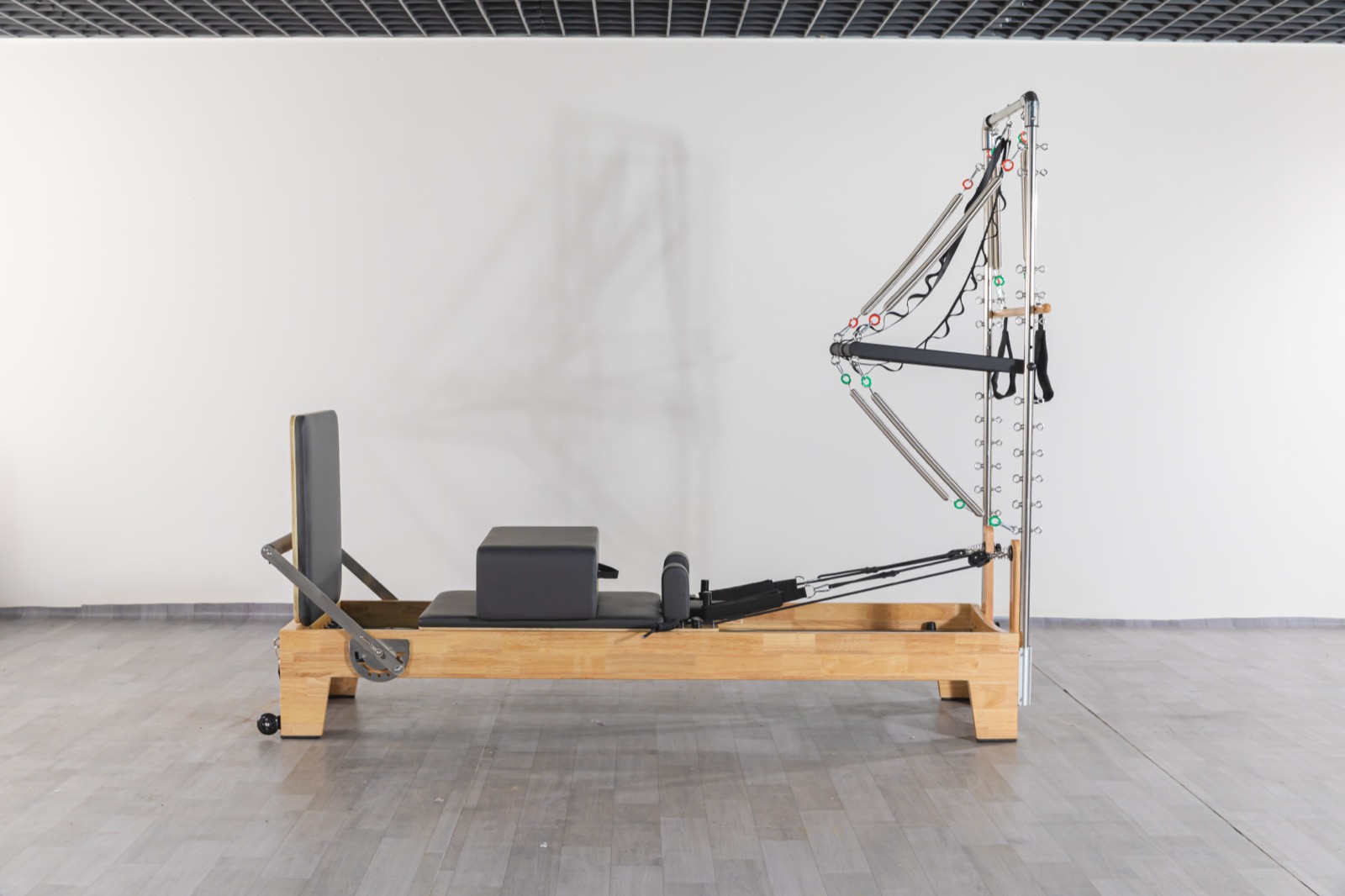
Wood Pilates reformers are often chosen by studios that want a warmer visual identity. Maple or oak finishes can make the room feel more premium, especially in boutique studios, hotel wellness rooms and private training spaces. Wood reformers also support a strong brand story when the buyer wants equipment that feels permanent, refined and aligned with the interior design.
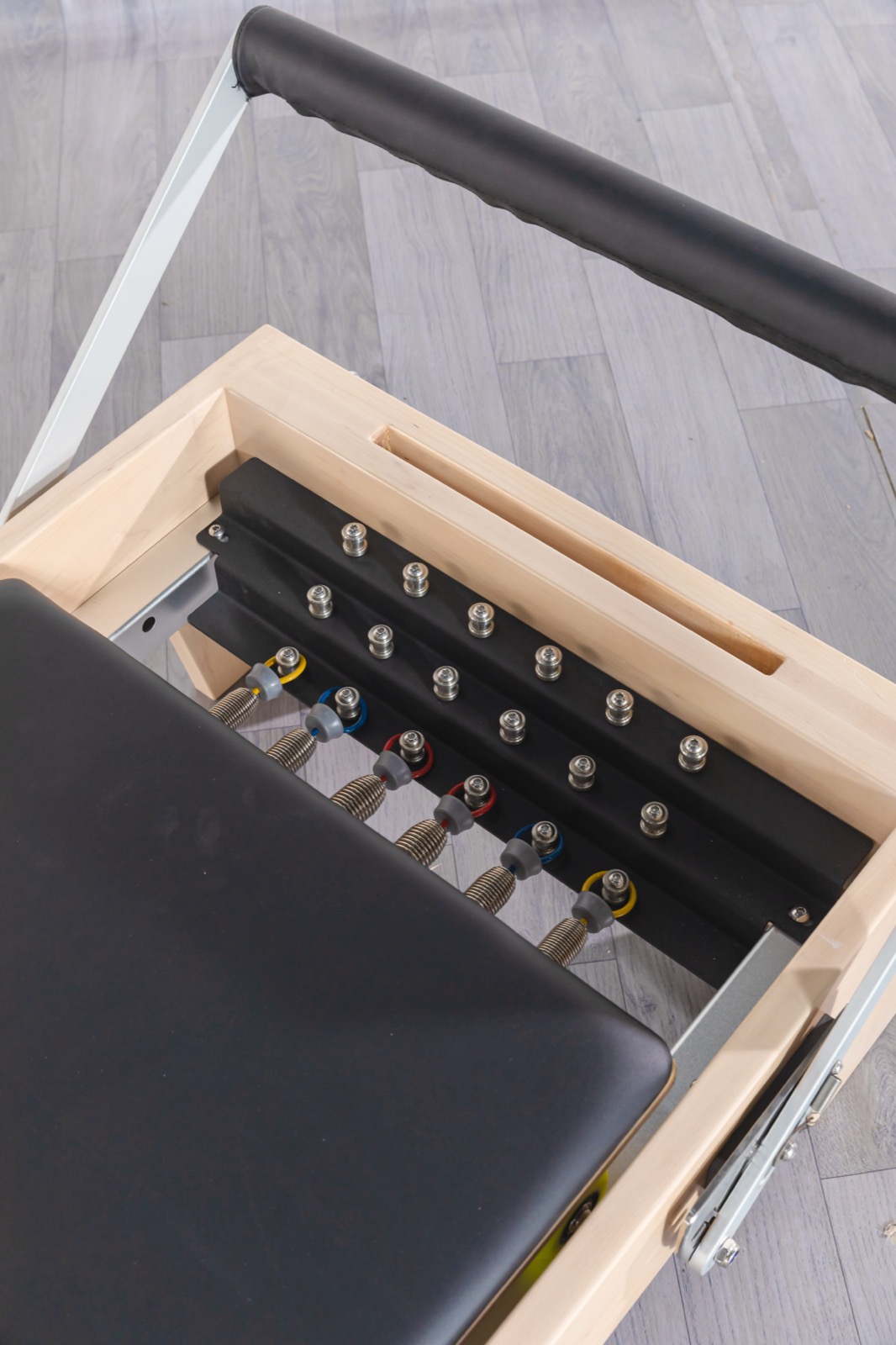
Bulk buyers should still check practical details. Confirm frame material, product dimensions, carriage smoothness, spring system, upholstery, ropes, pulleys and export packing. If exact dimensions or weights are not shown online, request the latest specification sheet before making the final decision. For private label buyers, ask whether logo placement, upholstery color, frame finish and packaging can be confirmed before production.
Aluminum reformers for modern and flexible spaces
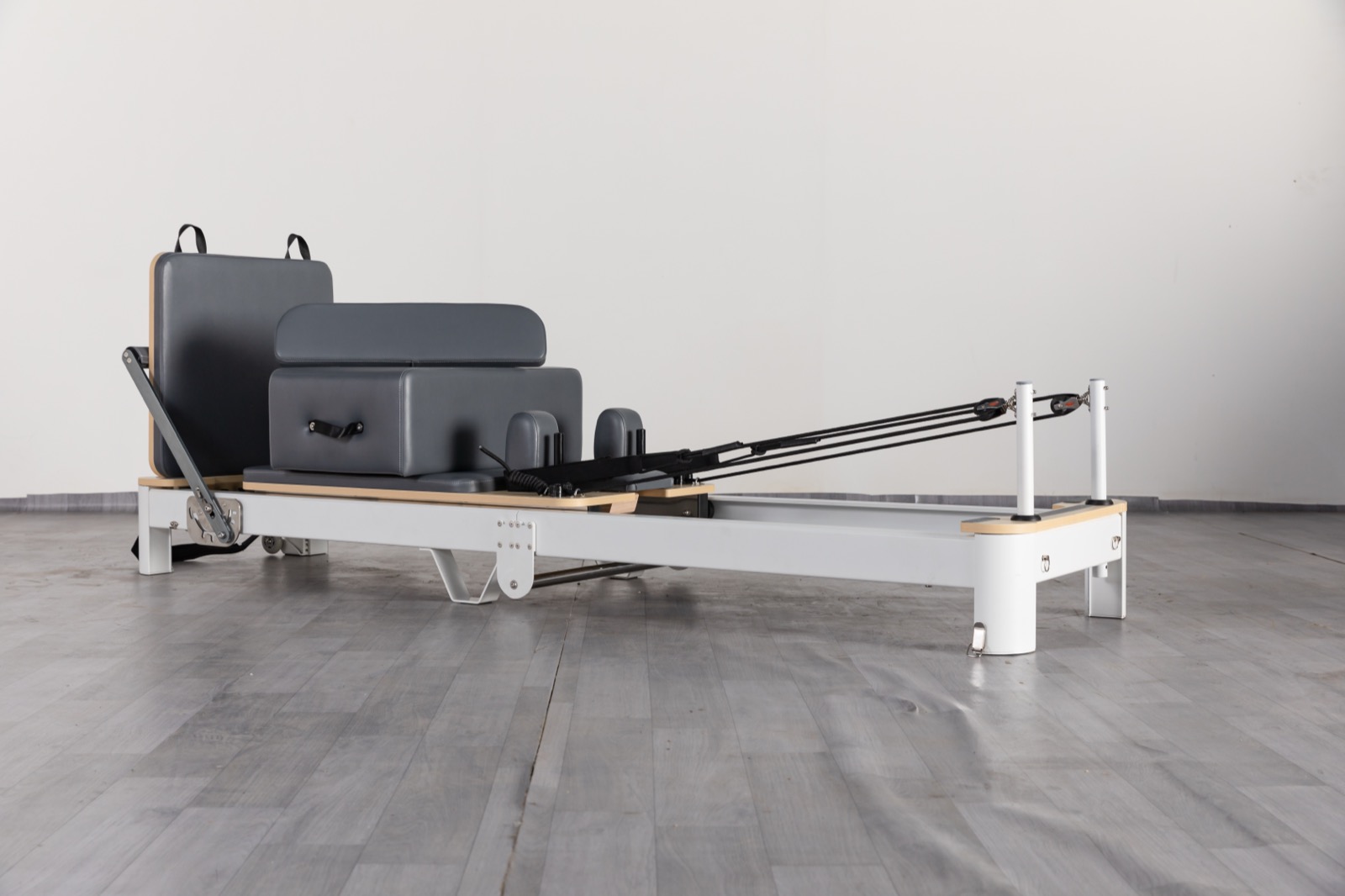
Aluminum reformers are often used when the buyer wants a modern appearance, easier handling or a folding structure. They can be useful for compact studios, home studio channels, online fitness equipment sellers and wellness rooms where equipment may need to move or store more easily. The key is to check that the frame and folding structure still feel stable enough for the intended use.
When evaluating aluminum models, ask about frame structure, folded and unfolded size, wheel or moving system, locking details, carriage movement, packing size and accessory compatibility. Do not choose a folding reformer only because it saves space. It must still support the class format and user experience expected in a serious studio environment.
Foldable reformers and compact room planning
Foldable reformers are attractive for compact rooms, mixed-use wellness spaces and home studio buyers. They can help a room support private training, storage and other services in the same footprint. But the buying decision should include daily operation: how often the reformer will be folded, where it will be stored, whether one person can move it, and whether the folding mechanism remains stable after repeated use.
Measure the room in both training and storage mode. Check door width, wall clearance, ceiling height, cleaning workflow and instructor movement around the reformer. For bulk orders, distributors should also confirm spare parts such as wheels, ropes, pulleys, hinges or locks where applicable. These details are more useful to buyers than broad claims about space saving.
Specifications to confirm before a bulk quote
A professional reformer inquiry should include more than a model name. Ask for product size, packing size, net weight, gross weight, frame material, upholstery material, spring system, rope system, pulley system, wheel or moving system, accessory list, color options, logo method and packaging notes. If a value is not published, it should be provided in a specification sheet or confirmed before production.
Price depends on configuration, quantity, customization and destination. A supplier should not need to invent a public price before understanding your model mix. For commercial buyers, a better quote request includes target quantity, destination country, preferred frame material, studio use case, custom logo needs and whether the order is for a studio, distributor, dealer or private label brand.
OEM and private label considerations
If you are creating a branded Pilates equipment line, confirm logo placement, upholstery color, frame color, packaging, product naming and repeat-order SKU structure before production. A private label project is not only a logo service. The buyer needs consistent product information, stable photography direction, packing labels and clear model records for future orders.
Ask what can be customized without affecting replacement parts or long-term supply. For example, upholstery color and logo placement may be easier to manage than changing core mechanical components. If a custom request changes the structure, confirm sample or pre-production review before approving a batch order.
Quality control and export packing
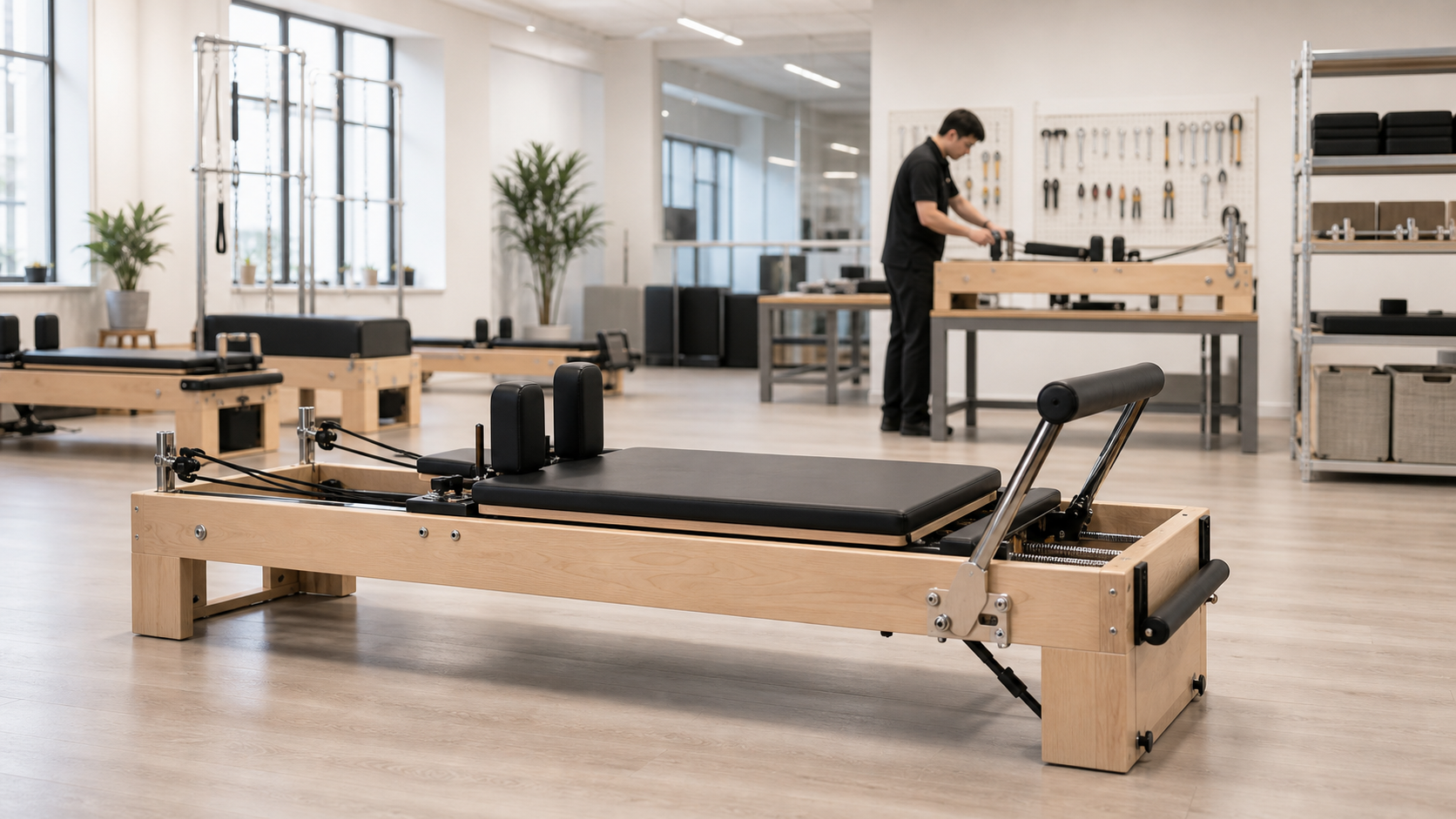
Quality control should cover visible finish, frame stability, carriage movement, spring connections, ropes, pulleys, upholstery, accessory count and packing organization. For export orders, the buyer should ask how the reformer is protected in transit and whether packing photos, carton details or accessory lists can be provided before shipment.
Good export packing reduces avoidable problems after arrival. Buyers should confirm product size, packing size, gross weight and accessory packaging before final shipment planning. For mixed containers, the packing list should clearly separate reformers, towers, chairs, barrels, boxes, jump boards and spare parts.
Commercial buyer checklist before ordering
A studio buyer should review the reformer from the viewpoint of daily operation, not only the first installation day. Consider how instructors will adjust the footbar, carriage, headrest, straps and springs during back-to-back sessions. If the studio plans group classes, the equipment should be intuitive enough for multiple instructors to use consistently. If the studio focuses on private training, the buyer may give more weight to customization, comfort and premium presentation.
For distributors and dealers, the checklist should also include local sales support. Can the supplier provide consistent model names, product photos, specification sheets and packing information? Can your sales team explain the difference between wood, aluminum, foldable and tower reformers without asking the factory every time? A reformer line becomes easier to sell when the product range is organized by buyer scenario instead of only by model number.
Importers should pay close attention to packing and after-sales planning. A low unit price can become expensive if carton details are unclear, spare parts are difficult to identify, or accessories are not packed in an organized way. Before a bulk order, ask whether the supplier can confirm accessory lists, carton marks, packing photos and the recommended spare parts for future service. This is especially useful when the order includes reformers, jump boards, reformer boxes and tower accessories in the same shipment.
For hotel wellness centers, the reformer may be part of a broader guest experience. The buyer should check whether the equipment appearance matches the room design and whether the configuration is practical for staff-supervised use. In many hotel projects, one or two premium wood reformers may work better than a room full of equipment that staff cannot manage. The supplier should help match the package to the wellness concept instead of only sending a wholesale price list.
For physiotherapy and rehabilitation buyers, the priority is controlled movement, stability, easy adjustment and the ability to support different user conditions. The buyer should confirm spring resistance options, accessory compatibility and whether a tower or Cadillac station should be included. If the clinic will use the reformer for therapy-led movement rather than general fitness classes, make that clear in the inquiry so the equipment recommendation is not too generic.
For private label brands, choose a reformer that can be repeated. Avoid building the entire brand around a highly customized product that is difficult to reproduce or maintain. A better path is to select a stable base model, confirm brand-facing details such as logo, upholstery color and packaging, and keep technical specifications traceable. This makes future reorders and warranty communication much easier.
When comparing quotes, do not only compare the first line item. Compare what is included: accessories, packing, customization, spare-part support, specification sheets, production communication and export readiness. A slightly clearer quote often saves time because the buyer knows what still needs confirmation before payment and shipment.
A practical first inquiry can be simple: send the target product type, quantity range, destination country, studio type, preferred material, customization needs and expected opening or sales timeline. This gives the manufacturer enough context to recommend wood, aluminum, foldable or tower options and to prepare a useful bulk quote.
How to turn this choice into a supplier brief
Once the buyer has narrowed the reformer type, the next step is to write a clear supplier brief. A good brief does not need to be complicated, but it should include the studio scenario, approximate room size, target equipment count, destination country, preferred frame material, desired visual style and whether the order needs logo or color customization. This information allows the manufacturer to recommend suitable models instead of sending a long catalog with no direction.
For a new studio, include the planned opening month and whether the equipment will be used for group classes, private training or both. If the studio is still designing the room, ask the supplier which products need the most clearance and which accessories should be stored nearby. This can prevent a common mistake: buying attractive equipment before confirming instructor workflow and room circulation.
For a distributor, include the expected sales channel. A dealer selling to boutique studios may need wood reformers, tower models and premium photography. An online seller may need foldable reformers, compact storage explanations and stronger packaging information. A wholesaler serving gyms may prefer durable commercial models and stable repeat-order SKUs. The more accurately the supplier understands your channel, the better the recommendation will be.
For a private label brand, attach logo files, brand color direction and packaging expectations early. If the buyer is not ready to confirm final artwork, the inquiry can still say which customization areas are important. The supplier can then explain which options are standard, which may require sampling and which should be avoided because they may affect maintenance or replacement parts.
If the buyer is comparing several suppliers, use the same brief for each manufacturer. This makes the quotations easier to compare. Ask each supplier to identify the recommended model, why it fits the use case, what specifications are confirmed, what still needs confirmation and what customization is possible. A quote that explains assumptions is more useful than a short price list.
Finally, ask for a practical next step. This may be a specification sheet, a model comparison, a package proposal, packing information or a custom logo feasibility check. A strong supplier conversation should move the buyer closer to a real purchasing decision, not simply produce more files to sort through.
FAQ
What is the best Pilates reformer for a commercial studio? The best choice depends on room size, studio positioning, class format and budget. Many boutique studios choose wood reformers, while compact rooms may consider aluminum or foldable models.
Should studios choose wood or aluminum reformers? Wood is often preferred for premium interiors, while aluminum can be practical for modern, foldable or space-saving needs. Both should be evaluated by stability, movement and commercial use.
What should I send before requesting a quote? Send model interest, quantity, destination country, room type, preferred material, customization needs and any packing or opening timeline requirements.
Can reformers be customized with a logo? Logo, upholstery color, frame finish and packaging can be discussed before production. Final options depend on model, quantity and order requirements.
Key Takeaways
- Choose reformers by studio use case, not only appearance.
- Wood, aluminum and foldable reformers serve different buyer scenarios.
- Bulk buyers should confirm specs, packing, customization and QC before ordering.