
This article is written for Lumina Pilates B2B buyers, with product links and inquiry paths adapted to Lumina's catalog.
Quick answer: Pilates reformer equipment buying guide
A Pilates reformer equipment buying guide should compare commercial use, frame material, carriage smoothness, spring resistance, adjustability, accessories, packing data, spare-part support and supplier reliability. B2B buyers should shortlist models by studio application, confirm specifications and MOQ, then request a quote with quantity, destination and OEM needs.
Why a commercial reformer should be evaluated differently
Choosing commercial Pilates reformer equipment is not the same as buying a home fitness product. A studio reformer must support repeated daily classes, different body types, instructor adjustments, cleaning routines and long-term spare-part service. For importers and distributors, the decision also affects after-sales support, product reputation and repeat orders.
At Lumina, reformer selection usually starts with the buyer's application: boutique group classes, private training, rehabilitation-style work, distributor catalog sales or OEM/private label programs. Each use case has a different balance of frame material, adjustability, storage, visual style and cost.
Start with the studio application before comparing prices
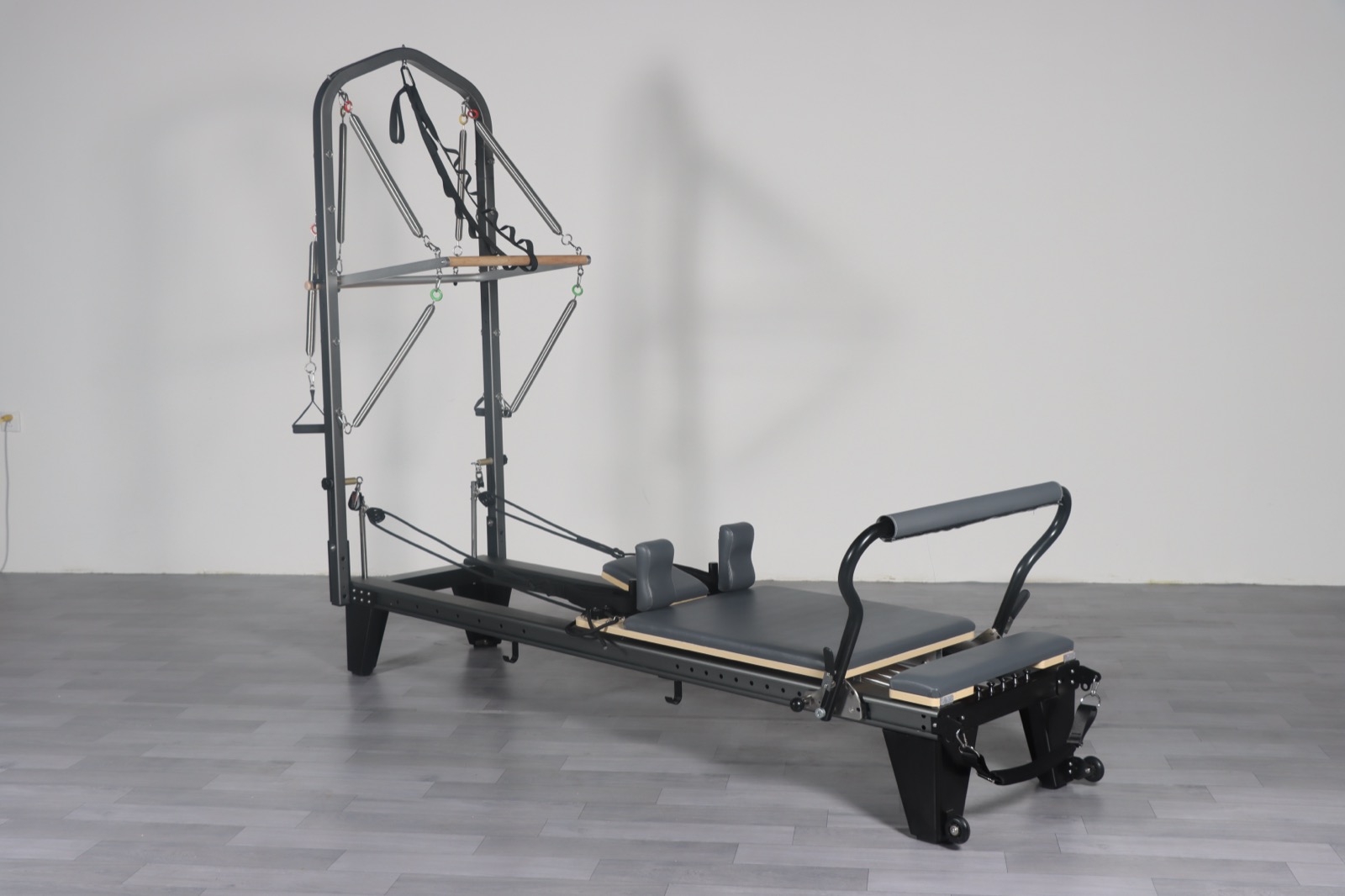
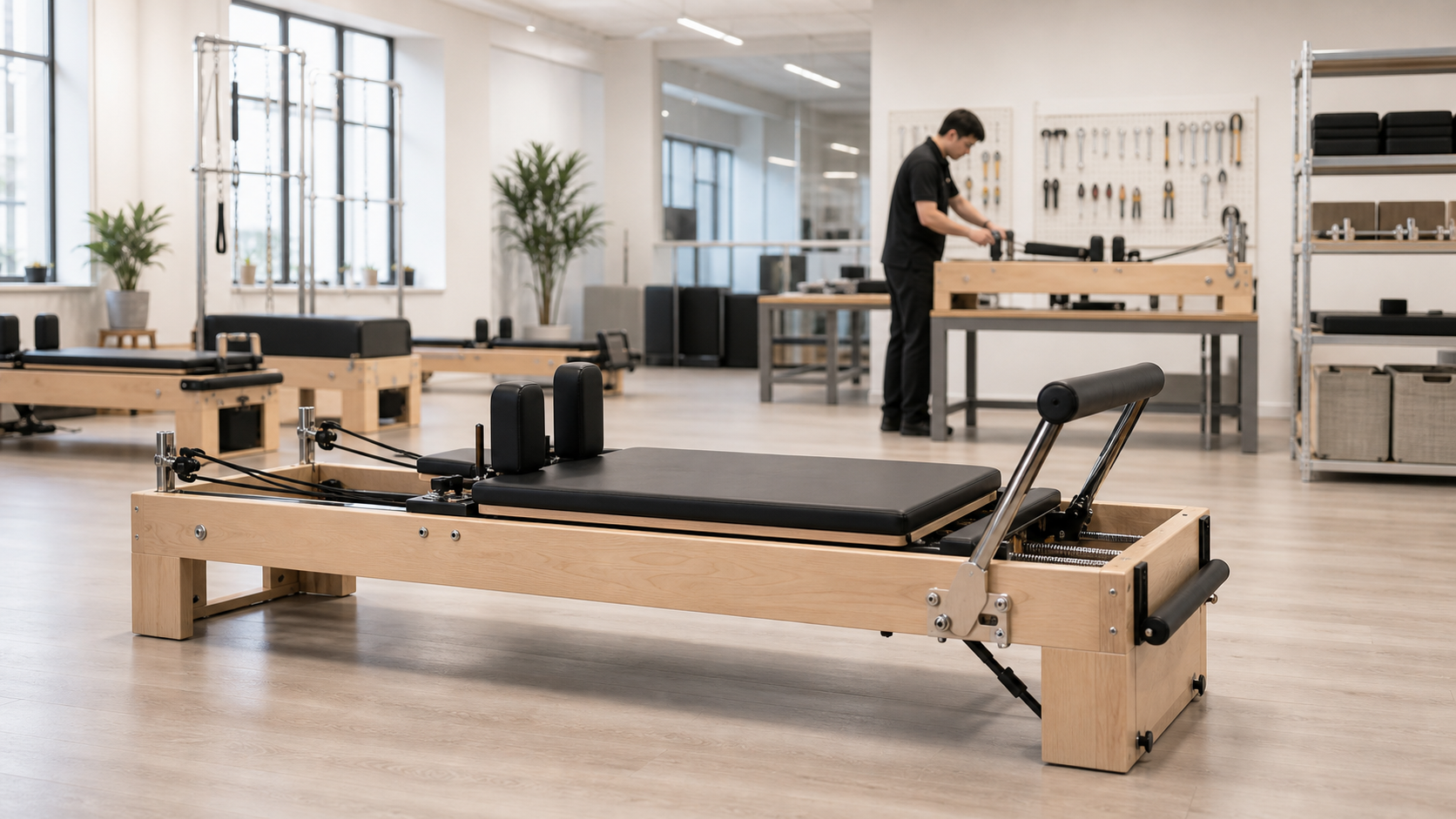
A boutique studio may prefer maple wood reformers because the natural frame supports a premium interior. A high-volume group class studio may prioritize easy adjustment, durable upholstery and consistent carriage movement. A small urban studio may need folding or compact models. A distributor may need three tiers: entry model, premium wood model and multifunction model.
The first question is not which reformer is cheapest. It is which reformer will keep the studio running smoothly after hundreds of sessions. When Lumina reviews customer requirements, we ask about room size, class capacity, instructor style, expected weekly use, destination country and whether the buyer needs logo, color or packaging customization.
Compare frame material, structure and finish
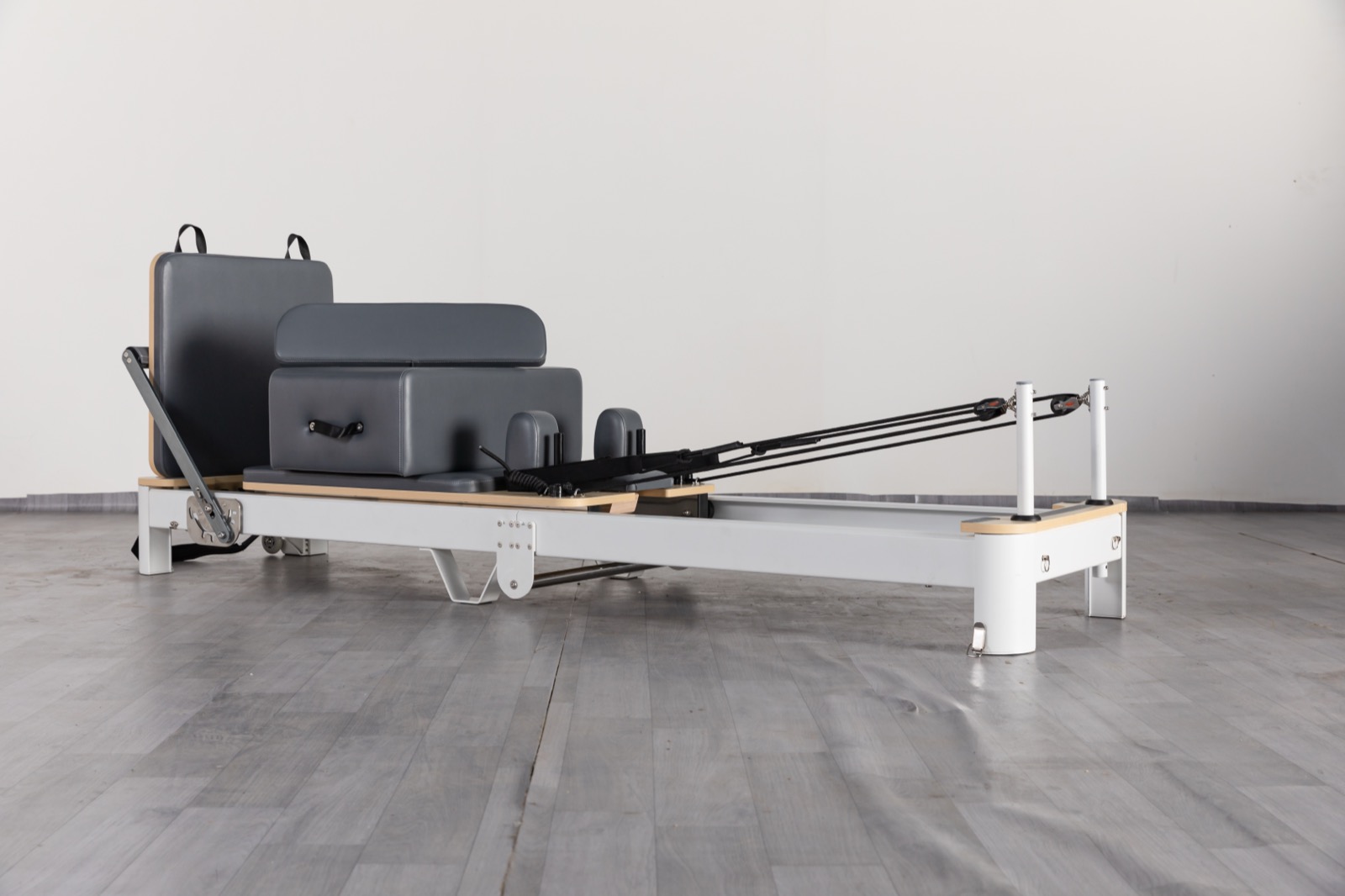
Maple wood and oak-style frames are popular for premium studios because they look warm and high-end. They also provide solid structure when properly manufactured and finished. Aluminum reformers are often chosen for modern studios, distributor catalogs and projects that need a lighter visual style or easier cleaning. Folding aluminum models can be useful when space is limited.
The frame should be checked for stability, finish consistency, joint strength and resistance to wobble. A commercial reformer should not feel flexible when the carriage moves or when the user changes position. For factory testing, Lumina checks frame assembly, carriage tracking, rope path, pulley response and visible surface finish before packing.
Check carriage smoothness, springs and adjustment points
A reformer that looks good but moves poorly will create complaints quickly. Buyers should ask how the carriage system is tested. Important points include wheel quality, rail straightness, noise level, carriage resistance, stopper position and whether the carriage returns consistently. Smooth carriage movement is especially important for precise movement control in group classes and private sessions.
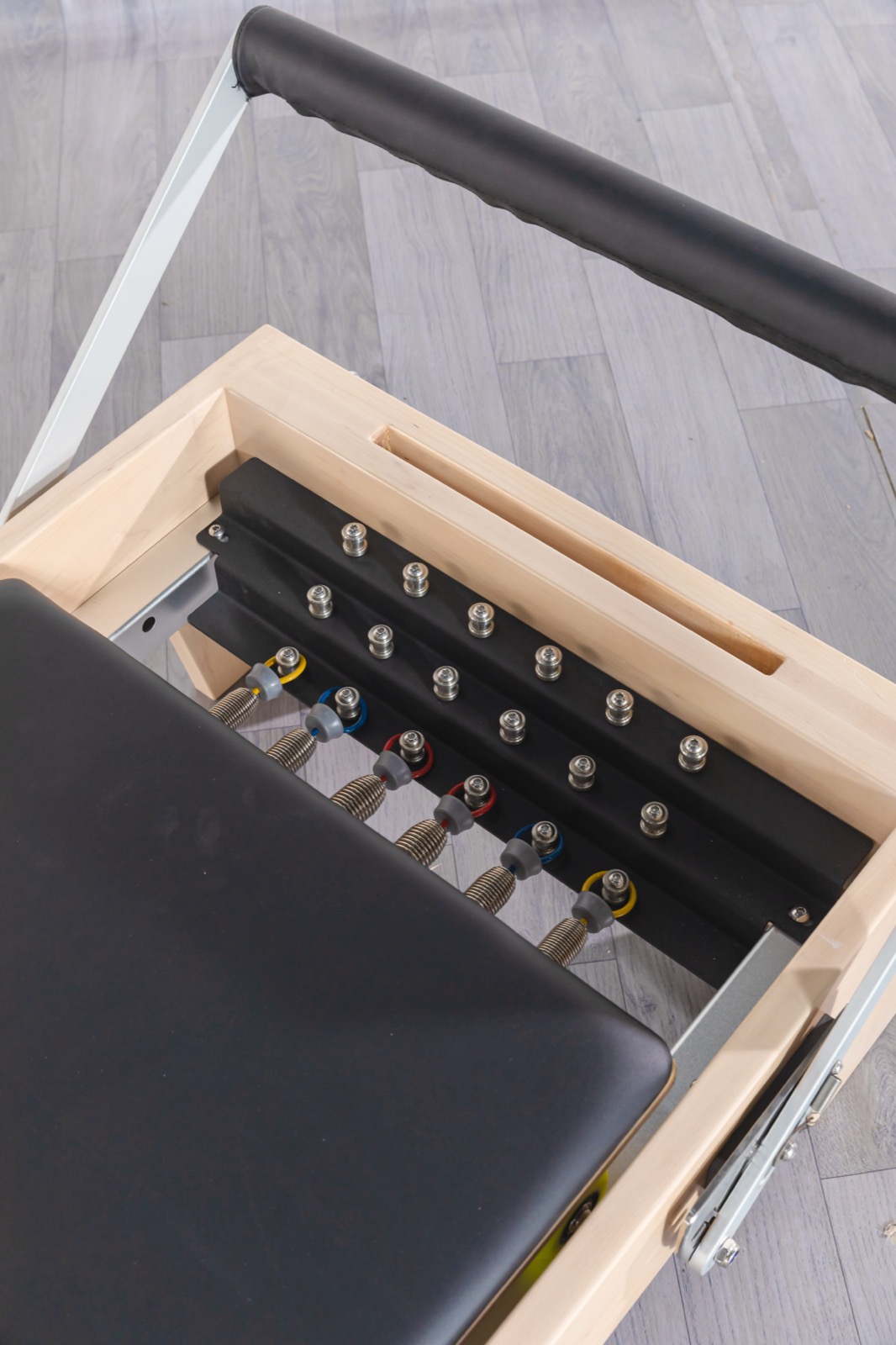
Springs define resistance quality. A studio reformer should include a practical spring set with different resistance levels and clear attachment points. Buyers should also check footbar positions, headrest adjustment, shoulder rest comfort, rope length adjustment and pulley alignment. These details affect instructor workflow every day.
Supplier checklist before requesting a quotation
A better inquiry should include target quantity, room size, preferred frame material, destination country, expected opening date and any customization needs. If the buyer is comparing models from a Pilates reformer equipment buying guide, it helps to explain whether the reformer is for group classes, private training, rehabilitation rooms or distributor resale.
Ask whether factory testing is performed before shipment, whether the supplier can provide packing photos, and whether spare parts such as springs, ropes, wheels, pulleys and upholstery can be supplied later. A lower initial price may become expensive if spare parts are difficult to obtain.
FAQ
What should a Pilates reformer equipment buying guide include? It should cover studio application, frame material, carriage movement, springs, adjustment points, accessories, product size, packing size, MOQ, OEM options, spare parts and supplier communication.
What is the best commercial Pilates reformer for a boutique studio? A maple wood reformer is often suitable because it combines stable function with a premium interior look. The final choice should depend on room size, class format and budget.
Is aluminum or wood better for a commercial reformer? Both can work for commercial use. Wood is often selected for premium visual identity, while aluminum can be practical for modern studios, folding designs and distributor product lines.
What should I inspect before shipping? Ask for checks on frame finish, carriage movement, spring set, pulley path, ropes, upholstery, accessories and packing condition.
Conclusion and next step
A commercial Pilates reformer should be selected by application, not by price alone. Buyers should evaluate frame material, carriage smoothness, springs, adjustability, spare parts and factory inspection. For studios and distributors, the best supplier is one that can explain the product clearly, prepare export packing and support long-term cooperation.
Planning a studio or distributor order? Send Lumina your room size, target quantity, preferred frame material and destination country. Our team can recommend a suitable reformer mix and prepare the next quotation step.
Related planning links
Key Takeaways
- Commercial reformers should be selected by studio application, not price alone.
- Frame stability, carriage smoothness, springs and adjustment points all affect daily use.
- Factory testing, packing inspection and spare-part support reduce procurement risk.