
This article is written for Lumina Pilates B2B buyers, with product links and inquiry paths adapted to Lumina's catalog.
Compact studios need equipment that works twice
A compact Pilates room often has to support private training, small group classes, storage, cleaning and sometimes other wellness services in the same footprint. A folding Pilates reformer can help studios use space more flexibly, but only when the buyer checks stability, storage workflow and daily setup time.
For distributors, folding reformers can also become an important catalog category. They are useful for urban studios, home training rooms, hotel wellness rooms and buyers who want commercial function without a permanent equipment layout.
Start with the real room layout
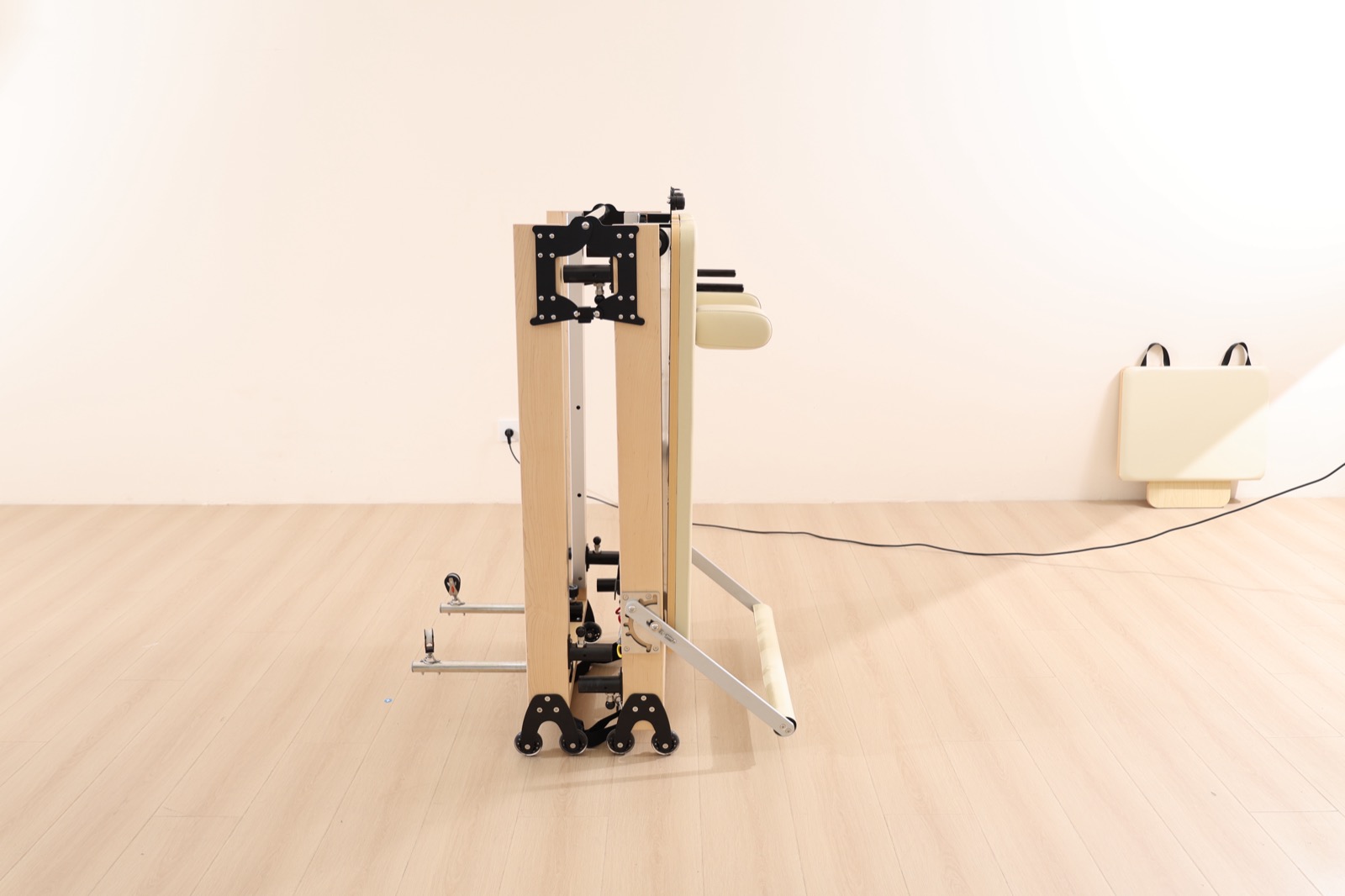
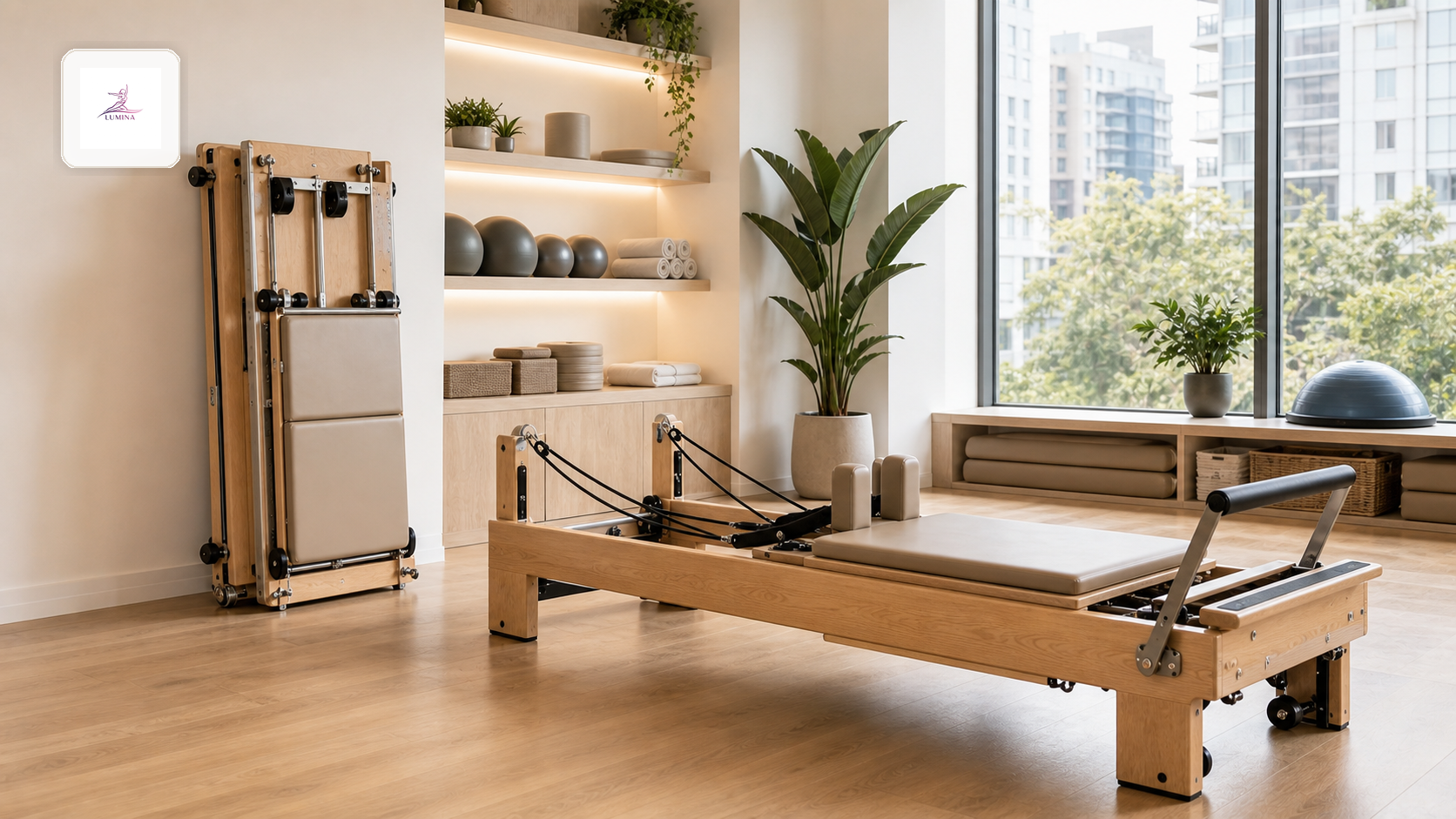
Before choosing a folding reformer, measure the room in both training mode and storage mode. Buyers should check the unfolded length, folded height, wall clearance, door width, ceiling height and the path used to move the reformer. A product that folds well on paper still needs to fit the daily room workflow.
Studios should also leave enough space around the reformer for instructor assistance. If the room will use two or more reformers, plan the walking path first. Compact does not mean crowded; guest comfort and instructor movement still define the quality of the session.
Check stability before storage convenience
A folding mechanism should not compromise training feel. Buyers should check frame rigidity, leg locking, carriage movement, rail alignment, footbar stability and noise level after repeated folding and unfolding. A reformer that feels unstable will not work for serious studio use.
Commercial buyers should ask whether the folding structure is tested before packing and whether the supplier can provide replacement wheels, hinges, locks or related hardware. Storage convenience is valuable only when the equipment still feels dependable in class.
Compare aluminum and wood folding options
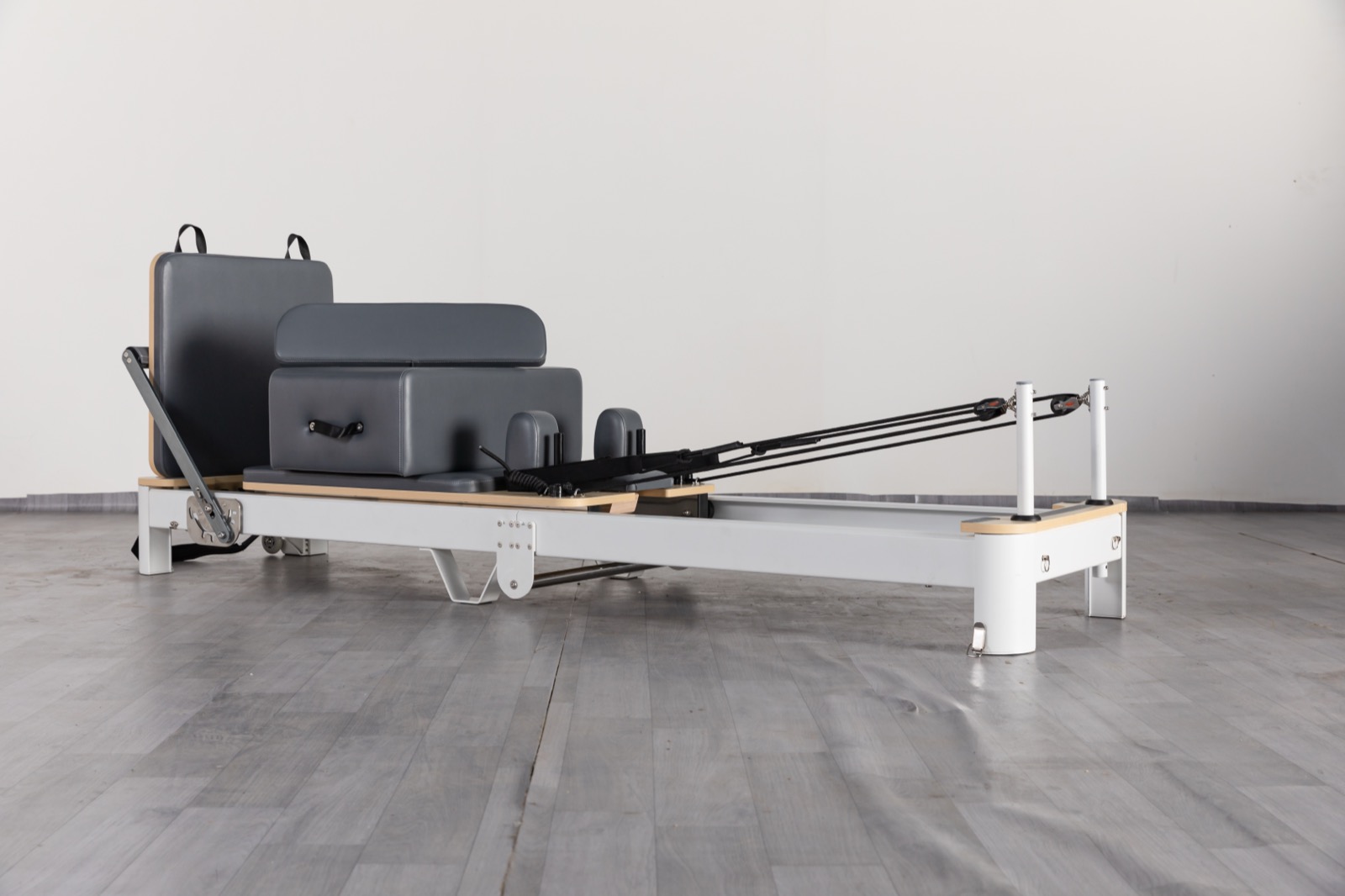
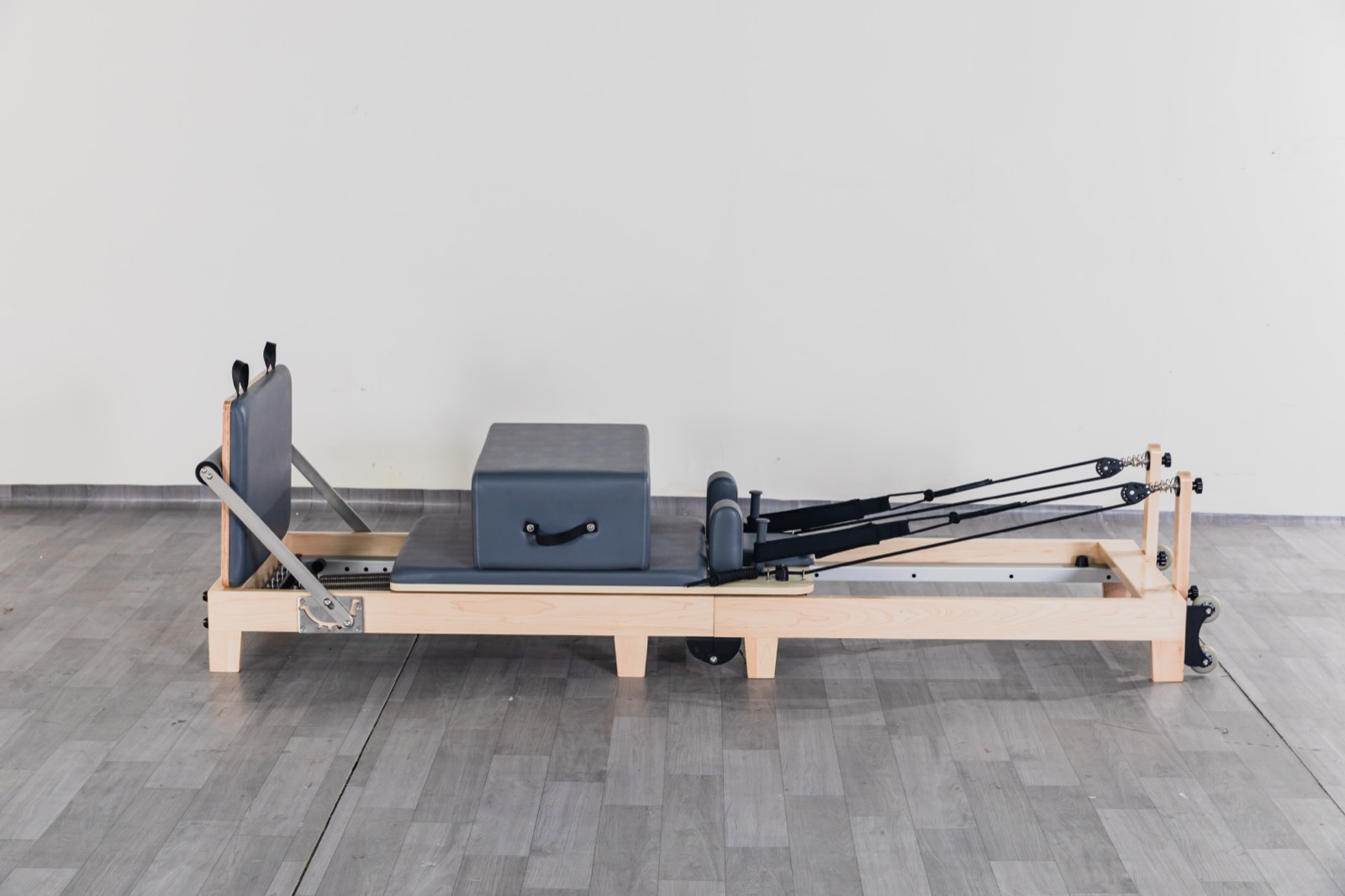
Aluminum folding reformers are often chosen for modern rooms, easier handling and a lighter visual profile. Wood folding reformers can better match warm boutique interiors and hospitality wellness spaces. The right choice depends on the buyer's market, room design and service model.
Distributors may want both options in a product line: an aluminum folding model for practical space-saving buyers and a wood folding model for premium interior projects. Clear positioning helps the local sales team explain the price difference.
Supplier questions before ordering
Ask the supplier for unfolded size, folded size, gross weight, packing size, recommended storage position, accessory set and maintenance guidance. It is also useful to ask how the reformer is protected in export packing because folding models include moving parts that must arrive aligned.
For OEM or private label projects, confirm whether logo placement, upholstery color, frame finish and packaging can be customized without affecting replacement parts. A folding reformer may become a repeat-order product, so specification control matters.
FAQ
Are folding Pilates reformers suitable for commercial studios? Yes, if the frame, locking system, carriage movement and setup workflow are suitable for repeated studio use.
Is aluminum or wood better for a folding reformer? Aluminum is often practical and modern, while wood can better match premium interiors. The best choice depends on room style and target buyer.
What should compact studios measure before ordering? Check unfolded size, folded storage size, door width, ceiling height, instructor clearance and the daily storage path.
Conclusion and next step
A folding Pilates reformer should be selected by space plan, stability, storage workflow and long-term service needs. Compact studios can benefit from foldable equipment, but only when the product remains reliable during daily teaching.
Planning a compact studio or distributor folding reformer line? Send Lumina your room size, target quantity, destination country and preferred frame material. We can help compare aluminum and wood folding options for quotation.
Key Takeaways
- Folding reformers should be evaluated in both training mode and storage mode.
- Stability, locking structure and carriage movement matter more than folding convenience alone.
- Aluminum and wood folding models can serve different studio and distributor segments.