
This article is written for Lumina Pilates B2B buyers, with product links and inquiry paths adapted to Lumina's catalog.
Quick answer for private label buyers
Custom logo Pilates equipment requires more planning than adding a mark to a product photo. Buyers should confirm product models, logo position, upholstery color, frame color, packaging, SKU naming, specification sheets, quality control checks and export packing before production.
The best OEM projects start with a clear product line. Decide whether the brand needs reformers only, or a broader range including Cadillac equipment, Pilates chairs, Wunda chairs, ladder barrels, spine correctors, reformer boxes, jump boards and accessories.
Choose the base product line first
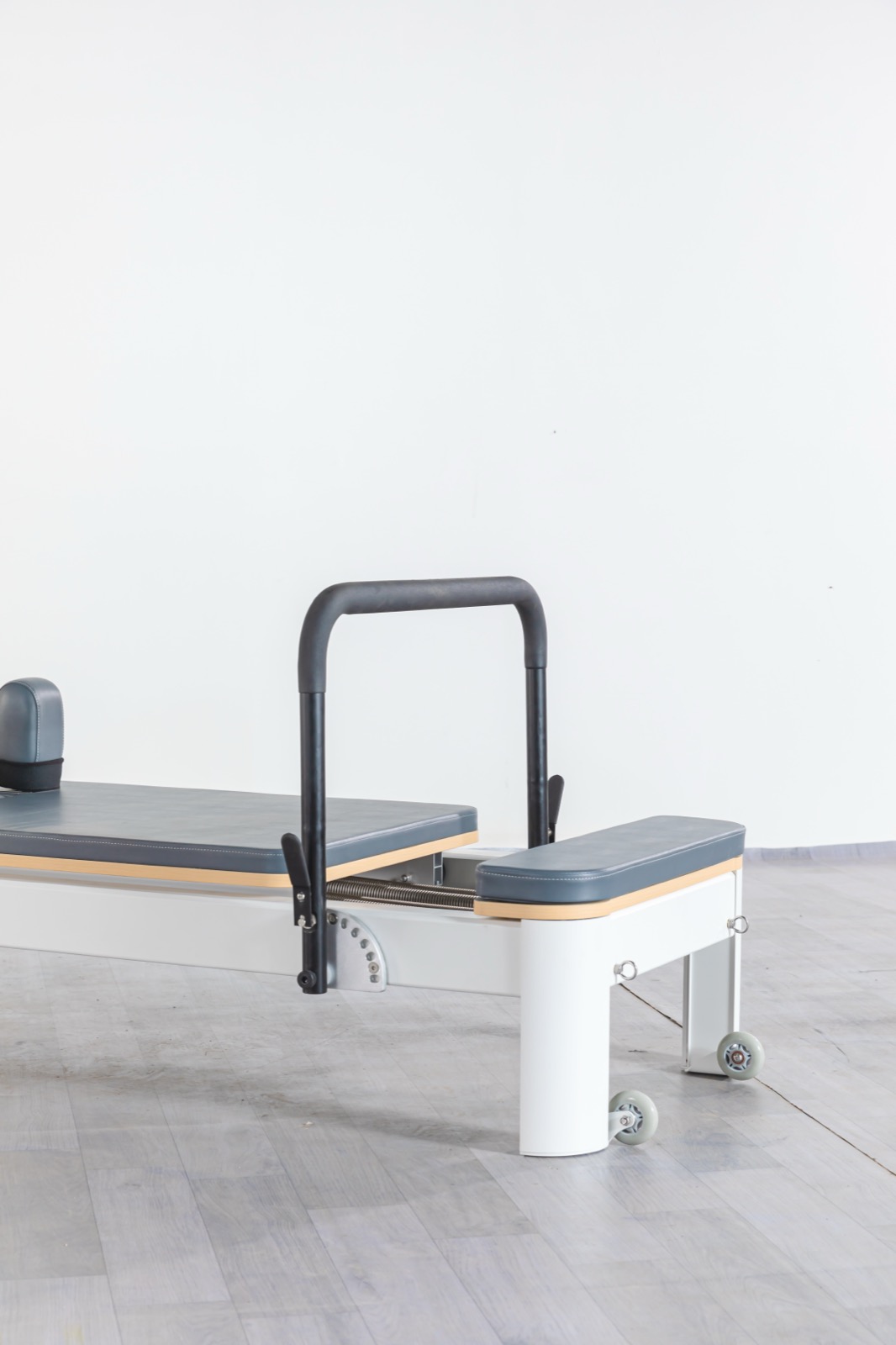
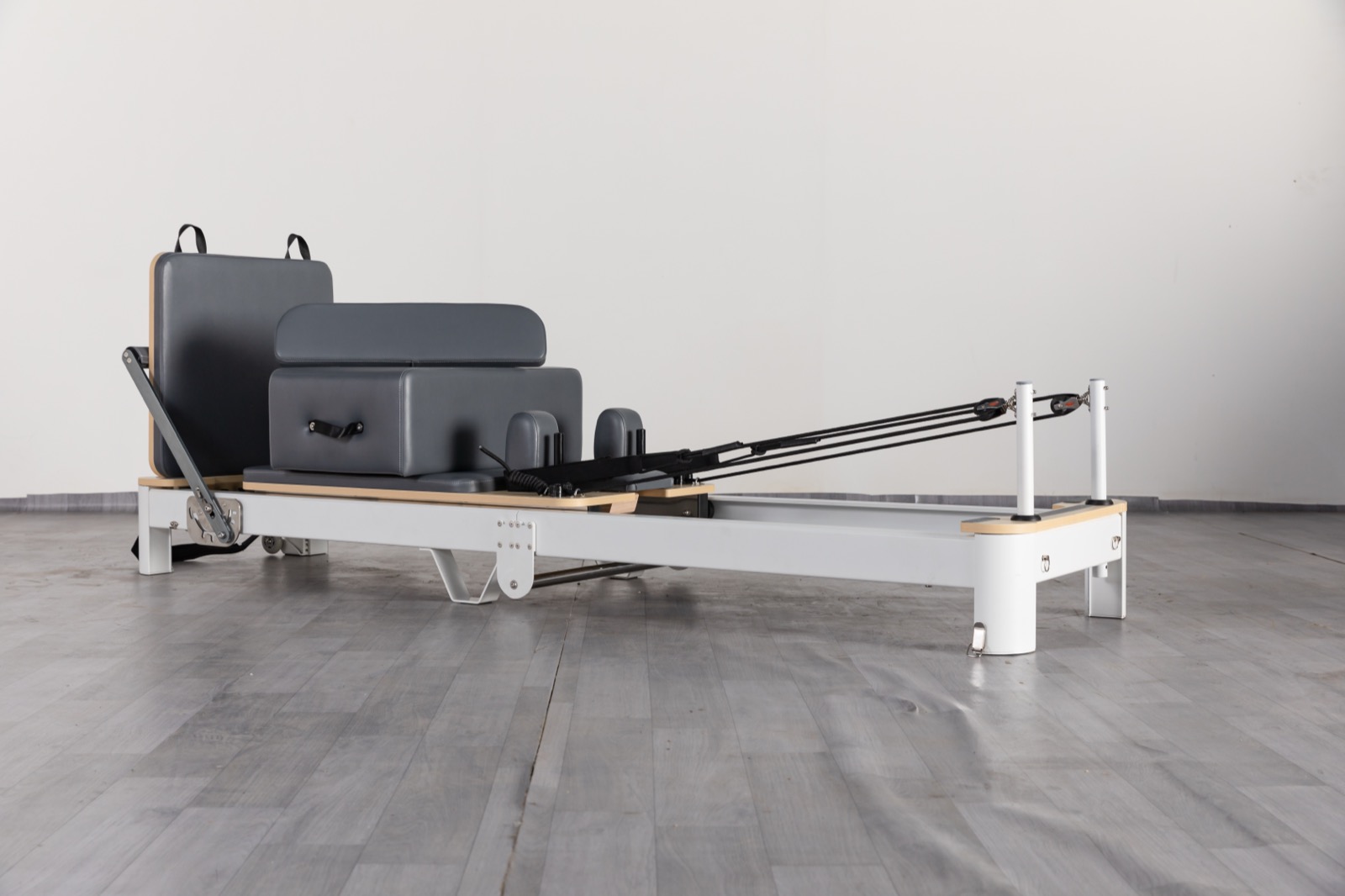
A private label brand should not start with packaging design before choosing models. First decide which products fit the target market: wood reformers for premium studios, aluminum folding reformers for compact spaces, tower reformers for multifunction rooms, or chair and barrel accessories for complete studio packages.
Distributors should also think about repeat orders. A smaller, clearer SKU line is easier to market and support than a scattered list of unrelated models. Ask the manufacturer which models are most practical for recurring wholesale supply.
Confirm logo placement and visual details
Logo methods can vary by product. Possible areas may include upholstery, product labels, visible frame positions, cartons or packaging inserts, but final feasibility depends on the model. Do not assume every surface is suitable for every logo method.
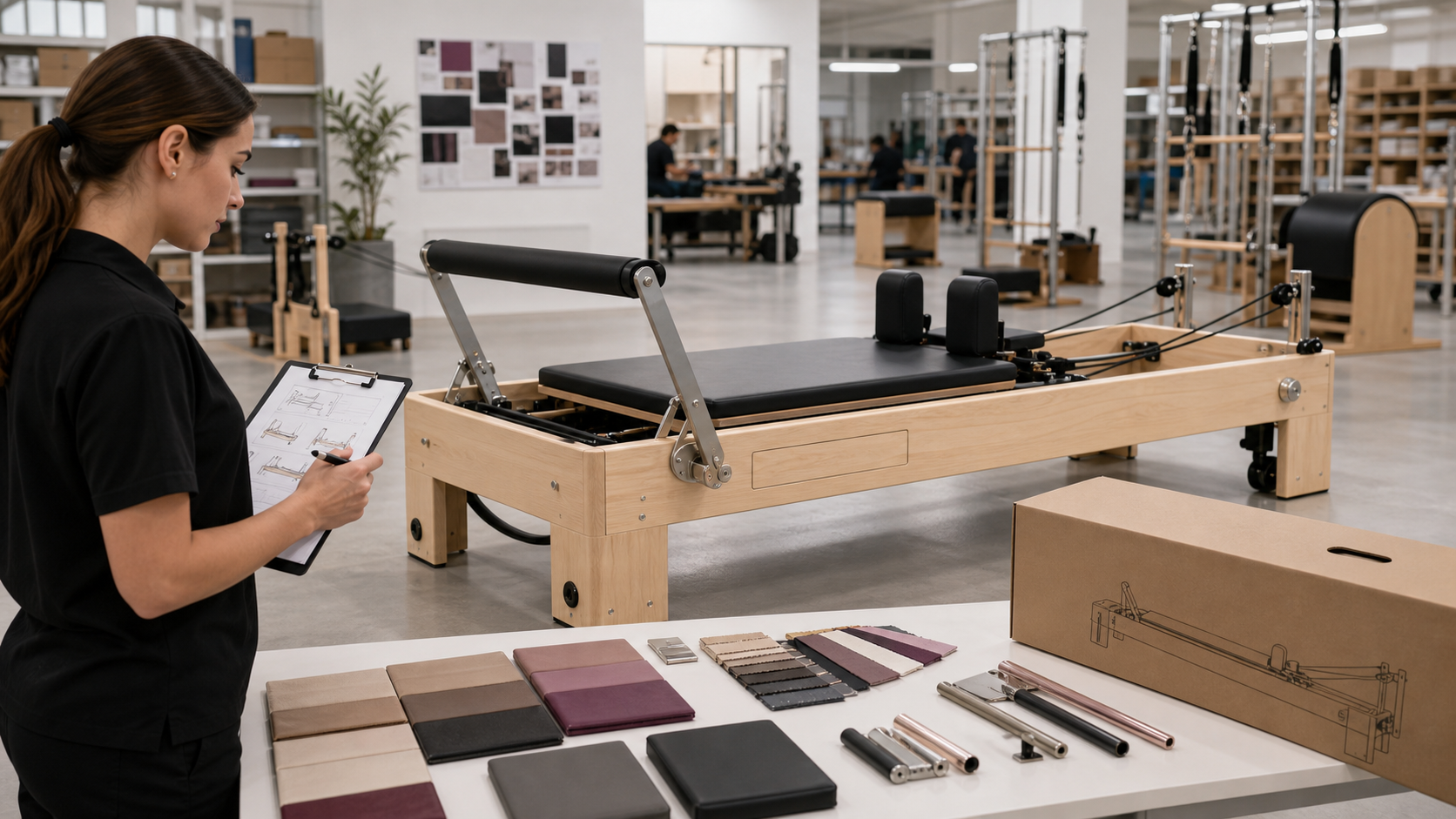
Prepare logo files, brand colors and placement expectations early. If the project needs custom upholstery color or frame finish, confirm samples or visual references before production. Small color differences can matter when the equipment is used in a premium studio environment.
Plan custom packaging and private label records
Private label packaging may include carton labels, product names, model references, accessory lists and basic brand information. It should support receiving, warehouse handling and local sales, not only look attractive. Clear labels reduce confusion when a shipment includes reformers, towers, chairs, barrels and accessories.
Keep product records organized. For each model, record frame material, upholstery option, size, packing size, weight, accessory list, logo method and replacement part notes. These records help distributors answer customer questions and reorder consistently.
Quality control for OEM orders
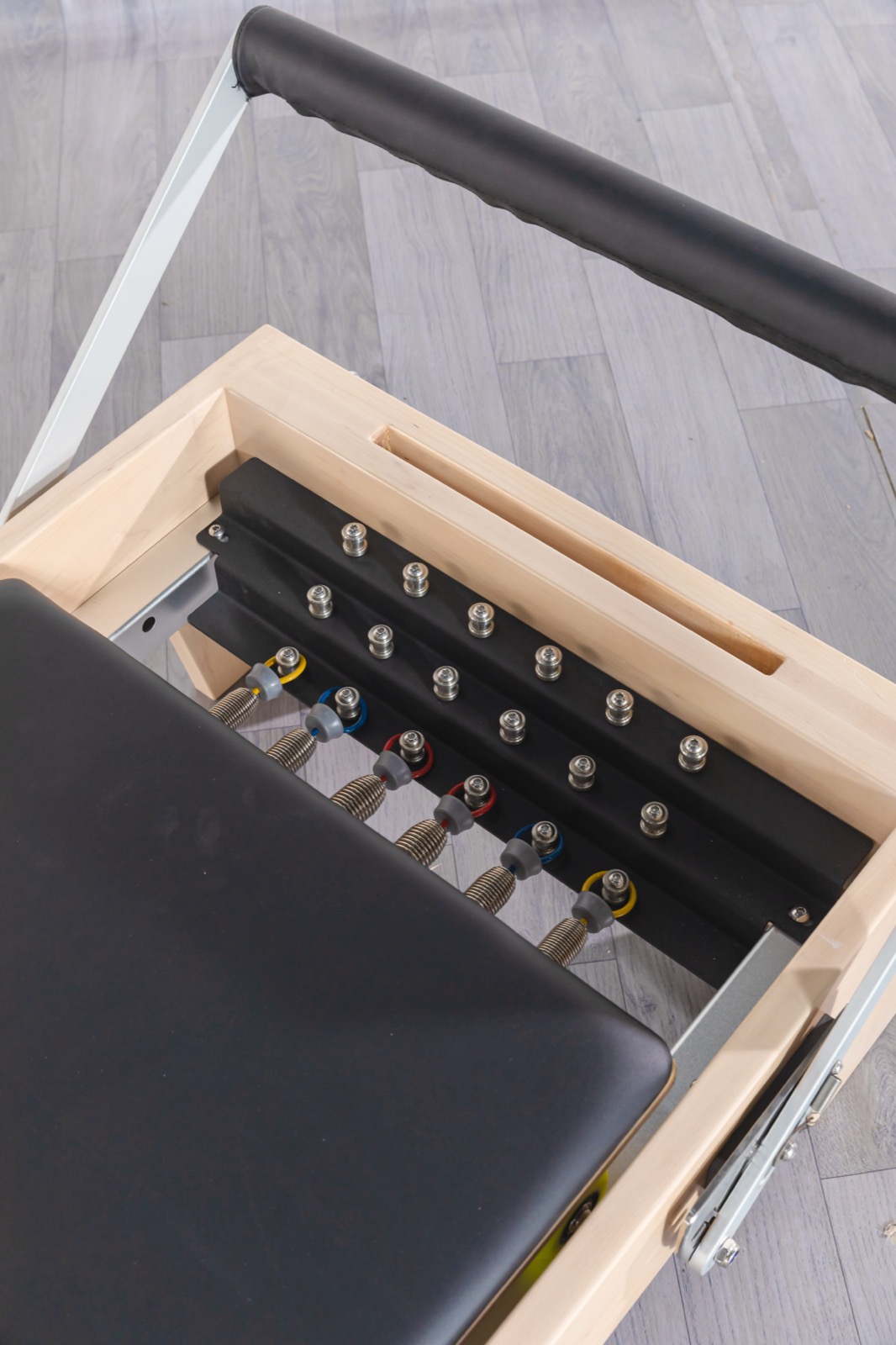
OEM orders need normal product quality checks plus customization checks. Confirm the frame, carriage movement, springs, ropes, pulleys, upholstery, logo position, color direction, packaging and accessory count before shipment. If the order includes multiple models, each model should be reviewed separately.
For private label reformers, chairs and barrels, make sure the customized visual details do not interfere with daily use, cleaning or replacement parts. Branding should support the product experience, not create maintenance problems.
Bulk quote and production communication
A good OEM inquiry includes target models, quantity, destination country, logo files, color direction, packaging needs and expected timeline. Price depends on configuration, quantity and customization requirements, so exact quote should be prepared after the model list is clear.
For overseas buyers, export packing should be part of the conversation. Ask how products and accessories are protected, how cartons are labeled and whether packing details can be reviewed before shipment.
OEM project checklist by buyer type
A Pilates studio owner usually needs customization that supports the room experience. This may include upholstery color, a discreet logo, frame finish consistency and a package of matching accessories. The studio may not need complex private label packaging, but it does need equipment that looks consistent in the room and feels reliable during daily classes.
A distributor or dealer needs a more structured OEM plan. The brand may require a repeatable set of reformers, chairs, barrels and accessories with clear SKU names, product photos, specification sheets and packing data. The distributor should ask the manufacturer which models are stable for repeat orders and which customization options can be maintained across future batches.
An importer should focus heavily on documentation. Custom labels, carton marks, packing lists, accessory lists, model names and spare-part references should be easy to understand. When the shipment arrives, the local warehouse should be able to identify every carton without calling the manufacturer for basic clarification.
A private label fitness brand should think beyond the first container. The brand may want a hero reformer, a compact reformer, a chair, a barrel and a starter accessory kit. Each product should have a clear reason to exist in the line. If two products serve the same buyer need, the product range may become harder to market and support.
For online fitness equipment sellers, product information quality is especially important. The seller needs accurate photos, feature copy, specification notes, packaging information and FAQ content. If a product is foldable, explain the storage use case honestly. If a product is commercial-grade, explain which commercial scenarios it is intended for instead of using vague claims.
Custom logo placement should be reviewed from both branding and maintenance angles. A logo that looks attractive in photos should not interfere with cleaning, user comfort, moving parts or replacement parts. Ask the supplier to confirm feasible placement areas for each product category rather than applying one rule to reformers, chairs and barrels.
Packaging should support the buyer's actual channel. A distributor warehouse may prefer clear carton marks and durable export protection. A private label retail channel may need more brand-facing packaging. A studio project may only need safe export packing and organized accessories. The best packaging plan depends on how the equipment will move after it leaves the factory.
Before final approval, create a confirmation sheet that lists model name, quantity, logo method, logo placement, upholstery color, frame color, packaging requirement, specification status, packing notes and buyer-side contact person. This sheet reduces small mistakes and gives both sides a shared reference throughout production.
From logo idea to production-ready OEM order
The first step is choosing the product families that will carry the brand. Many private label buyers start with reformers because they are the most visible product in a studio, but a stronger line may also include chairs, barrels, reformer boxes, jump boards and accessories. The product range should match the buyer's sales channel rather than trying to include every possible item.
The second step is confirming brand application. Send the logo file, preferred placement, color direction and any packaging references. The manufacturer should confirm which placements are feasible for each product category. A reformer, chair and barrel do not always share the same practical branding surface, so each product should be reviewed individually.
The third step is checking product specifications. Private label buyers need enough detail to sell the product under their own brand. This includes frame material, upholstery material, product size, packing information, spring system, rope and pulley system, accessory list, color options and packaging notes. If exact values are not available online, ask for specification sheets before publishing product pages or catalogs.
The fourth step is reviewing packaging. Export packing protects the product during international transport, while private label packaging supports brand presentation and warehouse organization. A buyer may need both. Confirm carton labels, product names, model codes, accessory organization and any brand-facing packaging requirements before production.
The fifth step is aligning quality control expectations. The buyer should ask how the customized elements are checked in addition to the normal product checks. For example, logo position, upholstery color, frame finish and packaging label accuracy should be reviewed along with frame stability, carriage movement, springs, ropes and pulleys.
The sixth step is preparing launch content. Private label brands often need photos, product descriptions, FAQ content and specification tables for their local website or sales materials. The buyer should avoid writing claims that the product cannot support. A manufacturer can provide technical notes, but the local brand should adapt them to its own market honestly.
The seventh step is protecting repeat orders. Keep every approved detail in a shared record: model, finish, logo method, color, packaging, accessories and spare parts. This is essential for distributors and online sellers because a second order should match the first order unless a change is intentionally approved.
A production-ready OEM order is not just a design approval. It is a complete commercial package that includes product selection, branding, specifications, QC, packing, documentation and future reorder logic. When these items are clear, the project is much more likely to support real sales instead of becoming a one-time custom experiment.
How OEM content supports sales after shipment
A private label project should produce more than finished equipment. It should also produce sales-ready information. Distributors and online sellers need clear product descriptions, material notes, specification tables, packing information, FAQ answers and honest application guidance for studios, clinics and wellness buyers.
The buyer should ask the manufacturer which details are confirmed and which should remain flexible. For example, exact product size or packing information may depend on model and configuration, while logo method or color options may depend on order quantity. Safe wording protects the brand from overpromising.
OEM content should explain buyer scenarios, not only product features. A reformer can be described for boutique studios, compact rooms, rehab clinics or private label retail channels. A chair or ladder barrel can be positioned as part of a complete studio package. This makes the product easier to sell through SEO and sales conversations.
After shipment, keep a shared record of approved content and specifications. If the brand updates a product page or catalog later, the team should know which claims are based on confirmed data and which details still need factory confirmation. This is part of building a credible private label Pilates equipment brand.
For Google SEO and AI search, the most useful OEM content answers practical buyer questions. Explain how logo placement works, what information is needed for a quote, why packaging depends on order requirements and which products can be grouped into a studio package. This type of content helps real buyers and avoids empty keyword repetition.
For sales teams, the same information can become a catalog page, inquiry reply, distributor pitch and FAQ document. A well-managed OEM project therefore improves both search visibility and buyer communication. The goal is not only to rank for custom logo Pilates equipment, but to help qualified buyers feel ready to send a serious inquiry.
This is especially important for overseas buyers who must compare suppliers remotely and need clear, consistent information before approving a branded bulk order.
FAQ
Can Pilates reformers have custom logo? Yes, logo options can be discussed before production, but final method depends on model, material and order requirements.
Can chairs and barrels be private labeled too? Yes, many private label projects include reformers, chairs, barrels and accessories, but each product needs separate feasibility confirmation.
What should buyers prepare for an OEM quote? Prepare model list, quantity, destination, logo files, color direction, packaging needs and target timeline.
Can pricing be confirmed before customization details? A rough discussion may be possible, but final quote depends on configuration, quantity and confirmed customization requirements.
Key Takeaways
- OEM Pilates equipment should start with a clear product line and SKU plan.
- Logo, color, packaging and specs must be confirmed before production.
- Private label buyers need records that support repeat orders and after-sales service.